



 News Editor
By David Odama
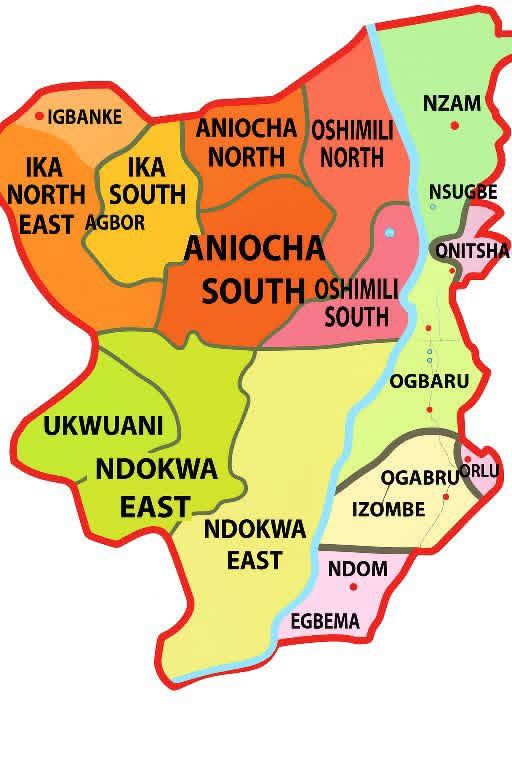
As agitations for the creation of Anioma State out of the present Delta State gather momentum, a statement attributed to legislators and local government chairmen from Delta North, opposing the proposed placement of an eventual Anioma State within the South-East geopolitical zone, has generated buzz, but stakeholders have argued that the concerns being expressed may be premature.
An elder state man, Rich Kay Enuenwosu in a statement, reaffirmed the long-standing ambition for Anioma statehood.
The statement, emphasised that any new state must remain strictly within the South-South geopolitical zone, specifically limited to the nine Local Government Areas of Delta North.
While the aspiration is historical and legitimate, the statement noted that, the release frames the matter narrowly, omitting broader debates that link Anioma identity to the wider Igbo cultural and geographical sphere.
The release asserted that Anioma is “historically, geographically, and administratively aligned with the South-South.”
Enuenwosu, however, pointed out that the question is more complex. Anioma shares significant cultural and linguistic ties with neighboring South-East communities, and its geographic contiguity may make South-East alignment a plausible option in future deliberations.
The statement added that administratively, South-South classification stems from past state boundary decisions in 1963 and 1996, not immutable cultural or legal fact.
Another key point in the release, suggesting that Delta North legislators can dictate the state’s alignment, may overstate local influence. Nigerian law requires extensive national consultation, including approval from two-thirds of state assemblies and National Assembly members, local referenda, and presidential assent.
“In other words, a press release alone cannot determine the outcome stating that what the release does not address is the ongoing constitutional reviews proposing new states for the South-East, public statements by national legislators supportive of broader geopolitical balance, and the strategic trade-offs inherent in rejecting viable options.
By simultaneously endorsing Anioma state creation while rejecting one of the few current constitutional opportunities, the release reflects a tension between aspiration and practicality.
Ultimately, the statement represents one local viewpoint in a nationwide conversation about state creation.
The placement of any new state is determined by constitutional process, federal law, and national negotiation—not solely by regional preference or historical sentiment. Constitutional observers emphasize that “statehood is a multi-tiered process, and local opposition does not equate to national decision.”
Sen.Rich Kay Enuenwosu, who authored the analysis, reassured the public that there is “no cause for alarm” and encouraged calm engagement as the constitutional and national dialogue on Anioma State creation continues.
The conversation, he noted, is far broader than any single press release, and the future of Anioma State will be determined not by statements, but by the collective will expressed through Nigeria’s constitutional mechanisms.
Call to donate, sponsor posts or for advert placements on our website.
Tel: +234 815 089 8880.
Thank you!