


 News Editor
By Ibrahim Nasiru
“A house divided against itself cannot stand, but a house in limbo cannot even be built.”
As Nigeria drifts toward the 2027 electoral cycle, the political landscape is witnessing a structural collapse of the opposition that is as historic as it is chaotic.
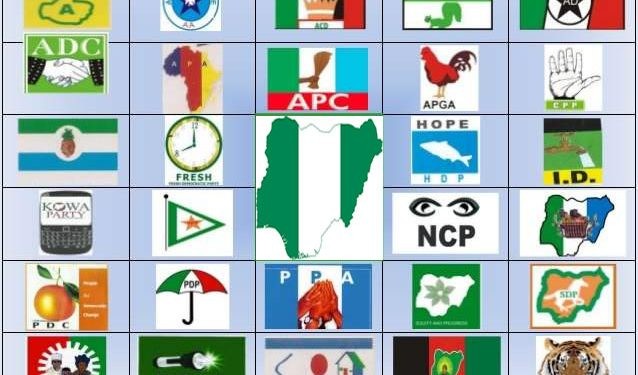
While the ruling APC consolidates its grip, the three pillars of the alternative front – the ADC, the PDP, and the Labour Party are trapped in a state of administrative and judicial paralysis that threatens to turn the next general election into a one-horse race.
The crisis begins at the very foundation of the “New Third Force.” The African Democratic Congress (ADC), once touted as the grand vessel for the Peter Obi and Kwankwaso-led National Opposition Coalition, has become a legal ghost town.
On April 1, 2026, the Independent National Electoral Commission (INEC) effectively pulled the rug from under the party’s feet, removing the David Mark-led National Working Committee from its official portal.
At a world press conference on April 2nd, a defiant Mark demanded the resignation of the INEC Chairman, accusing the commission of a “blatant destabilisation and infiltration of all major opposition political parties” aimed at “state capture.”
Despite his rhetoric of a “historic rescue mission,” the party remains legally evicted from its own identity.
By April 8, this administrative “limbo” curdled into a desperate, last-stand defiance.
Yesterday’s #OccupyINEC mega-rally in Abuja saw the unthinkable: Atiku Abubakar, Peter Obi, and Rabiu Kwankwaso standing shoulder-to-shoulder, a desperate “trinity” united by the looming shadow of their own irrelevance.
Their joint demand for the head of the INEC Chairman and the dismantling of the 2026 Electoral Act isn’t just a protest, it is a confession. It is an admission that while they played checkers with internal factions, the ruling powers were playing 4D chess with the law.
But the most damning evidence that this house is built on sand came during that very protest. Even as the “Big Three” staged their show of unity, a new breakaway faction of 25 ADC state chairmen, led by Kingsley Temitope Ogah, emerged to reject the entire “rescue mission.” By declaring their own interim leadership and siding with the very commission the top brass were protesting, these chairmen proved that while the generals are at war on the streets, the home team has already defected.
The “House of Cards” isn’t just wobbling from the outside; it is being dismantled from within by its own architects.
If the ADC is a ghost town, the Peoples Democratic Party (PDP) is a crowded battlefield where the “old landlords” are burning the house down to prove who owns the deed. The “Party in the ICU” has now split into two distinct, warring realities. Senator Gabriel Suswam, once a party stalwart, resigned in February 2026, lamenting that the PDP has regrettably become “plagued by persistent and unresolved internal conflicts.”
This was followed by Senator Seriake Dickson’s exit in March, who bluntly stated, “The PDP is sick and presently in the ICU,” as he moved to the newly registered NDC.
While the Nyesom Wike-backed faction held a national convention on March 30, the rival Kabiru Tanimu Turaki faction dismissed the event as a “jamboree.”
Basking in a digital defiance, the Turaki-led group announced on April 1 that they had registered over 4.2 million members on a private portal, vowing to fight the “government agents masquerading as opposition leaders.” Yet, with a Federal High Court barring them from their own headquarters at Wadata Plaza, they are a leadership with millions of names but no physical home.
Watching this from the sidelines is the Labour Party (LP), the “leaking roof” of the opposition. While the PDP burns its deed, the Labour Party has simply changed the locks.
With Senator Nenadi Usman now legally installed and the Julius Abure era declared expired by the courts, the party has turned its frustration outward creating a “Hall of Shame” for its defecting lawmakers.
This move comes as its 2023 figurehead, Peter Obi, officially boarded the ADC ship on April 1, 2026.
The upcoming April 28th National Convention in Umuahia isn’t just a meeting; it’s a desperate attempt to patch a roof that the most important tenants have already fled.
The tragedy of the Nigerian opposition is not a lack of supporters, but a lack of a roof that can hold. Between the ghost town of the ADC, the battlefield of the PDP, and the leaking roof of the Labour Party, the “Third Force” is standing in the rain, while the ruling party simply waits for the storm to do its work.
In the race for 2027, Nigeria’s opposition isn’t just losing the lead; they are currently losing the track.
Chief Ibrahim Nasiru
A Public Affairs Analyst writes from Abuja
Call to donate, sponsor posts or for advert placements on our website.
Tel: +234 815 089 8880.
Thank you!