



 News Editor
By David Akoji
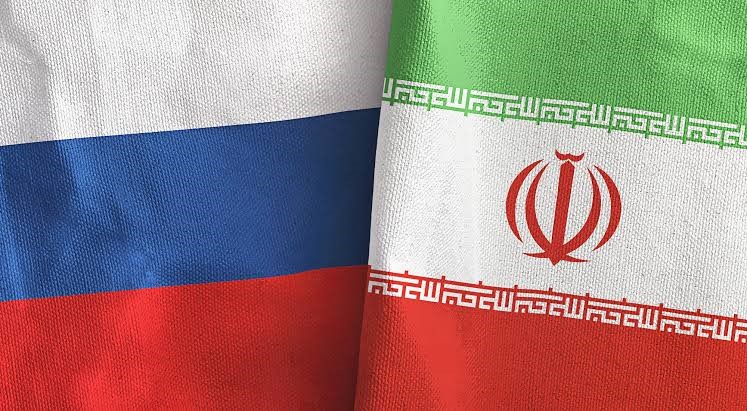
As tensions rise around the Strait of Hormuz, the world’s attention has understandably focused on the immediate protagonists: Iran, the United States and their Gulf allies. Yet, for countries far removed geographically, including Nigeria, the implications of Iran’s growing recourse to Russia are neither distant nor abstract. They are immediate, tangible, and potentially destabilising.
At first glance, Nigeria, as Africa’s largest oil producer, might appear positioned to benefit from any disruption in global oil flows. After all, roughly one fifth of the world’s petroleum passes through the Strait of Hormuz daily. Any sustained instability typically drives up crude prices, a scenario that should, in theory, boost Nigeria’s export earnings. But this assumption is dangerously simplistic.
The reality is more paradoxical.
Nigeria operates a fragile, import dependent petroleum ecosystem. Despite its crude wealth, the country relies heavily on imported crude and refined products. When tensions escalate in Hormuz and oil prices surge, the cost of crude and refined fuel imports rises correspondingly. This translates almost immediately into higher pump prices, increased transportation costs, and a ripple effect across food and commodity markets. Inflation, already a persistent challenge, tightens its grip on households.
In this context, Iran’s alignment with Russia deepens the crisis. Russia, itself a major energy exporter, stands to benefit from elevated global prices. The longer instability persists, the more both countries can leverage energy as a geopolitical tool. For Nigeria, this means prolonged exposure to volatile fuel costs, complicating fiscal planning and undermining economic stability.
Across Africa, the story is similar, though with regional variations. Net oil importers such as Kenya, Senegal, and Morocco face acute balance of payment pressures as energy bills rise. Even oil exporters like Angola and Algeria are not immune; their economies remain tethered to global price swings and external demand shocks. The African Continental Free Trade Area (AfCFTA), still in its formative stage, risks disruption as higher shipping and insurance costs undermine intra African trade competitiveness.
Beyond energy, the strategic implications are equally profound. Iran’s outreach to Russia signals a broader reconfiguration of global alliances, a shift from a unipolar or even bipolar order to a more fragmented, bloc driven system. For African states, many of which have historically pursued non alignment or strategic balancing foreign policy, this presents a dilemma. The pressure to “choose sides” in an increasingly polarised world could constrain diplomatic flexibility and economic partnerships.
Nigeria, in particular, must tread carefully. Its foreign policy tradition of non alignment and Afrocentrism will be tested by competing expectations from Western partners and emerging Eastern blocs. The country’s leadership role within Economic Community of West African States and the African Union places an added burden on it to articulate a coherent continental response.
There is also a security dimension that cannot be ignored. The militarisation of global chokepoints, from Hormuz to the Bab el-Mandeb, raises the risk of supply chain disruptions that extend beyond oil to food, technology, and critical infrastructure. Africa’s dependence on maritime trade routes makes it particularly vulnerable. Any sustained conflict could lead to increased shipping costs, delayed cargo, and heightened insurance premiums for vessels operating along key routes.
What, then, is the way forward?
First, Nigeria must not only support the Dangote Refinery but also accelerate its long delayed publicly owned refining capacity. Similarly, there must be deliberate strategy to exit the forward sales of Nigeria’s crude which the previous administration plunged the country into. The operationalisation and optimisation of domestic refineries, both public and private, are no longer merely economic priorities; they are strategic imperatives. Reducing dependence on imported fuel would insulate the country from external shocks emanating from distant geopolitical flashpoints.
Second, there is a need for deliberate energy diversification across the continent. Investments in renewables, gas infrastructure, and regional power pools can help mitigate the impact of global oil volatility. Africa must leverage its abundant natural resources to build resilience rather than remain hostage to external supply chains.
Third, African diplomacy must become more coordinated and proactive. Rather than reacting to crises shaped elsewhere, the continent should use platforms such as the African Union to advocate for de-escalation, protect maritime routes, and assert its collective interests in global governance forums.
Ultimately, the unfolding alignment between Iran and Russia over the Strait of Hormuz is a reminder of an enduring truth: in an interconnected world, no region is insulated from distant conflicts. For Nigeria and Africa, the challenge is not merely to endure these shocks, but to anticipate, adapt, and transform them into opportunities for structural reform.
If Hormuz trembles, Africa cannot afford to stand still.
Call to donate, sponsor posts or for advert placements on our website.
Tel: +234 815 089 8880.
Thank you!