



 admin
admin
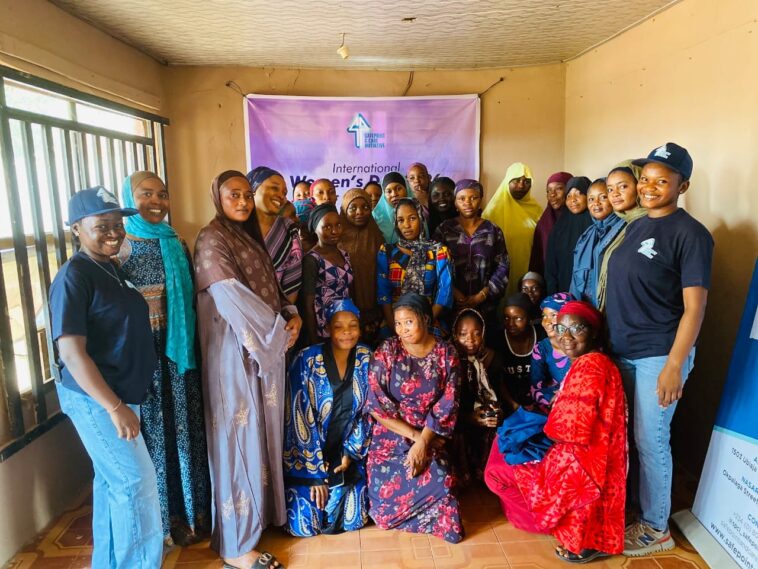
To commemorate the 2026 International Women’s Day, SafePoint and Care Initiative (SPCI) carried out community outreach programmes focused on Water, Sanitation, Hygiene (WASH), and menstrual health, empowering women with practical knowledge to improve health and wellbeing in their communities.
The first outreach was held on Monday, March 9, 2026, in Kpaduma III, an urban poor settlement in the heart of Abuja, where women received training on essential hygiene, sanitation, and menstrual health practices.
For many households in the community, access to clean water and safe sanitation remains a daily challenge. During the session, women were equipped with practical knowledge on safe water storage and treatment, hygiene practices that prevent disease, sanitation and maintaining healthy home environments. The training also included menstrual health education, where participants were guided on proper menstrual hygiene practices and safe disposal of sanitary materials.
Participants were further encouraged to become community WASH champions, sharing the knowledge gained with their families, children, and neighbours.
Continuing the commemoration, SPCI extended the outreach to Keana in Nasarawa State on Tuesday, March 10, 2026, where women in the community were similarly equipped with life-saving knowledge on water, sanitation, hygiene, and menstrual health management.
The outreach emphasised the critical role women play in safeguarding the health of their families and communities. According to the organisers, when women have access to knowledge on clean water, hygiene, sanitation, and menstrual health, the benefits extend beyond individual households to the wider community.
Through these activities, SPCI highlighted the importance of investing in women through knowledge and practical skills, noting that stronger and better-informed women contribute to healthier and more resilient communities.
The outreach formed part of SPCI’s broader efforts to promote community health, women’s empowerment, and sustainable development, in line with the spirit of International Women’s Day, which calls for actions that advance access, dignity, and empowerment for women and girls.
The organisation noted that empowering women with knowledge on WASH and menstrual health is not only essential for improving hygiene practices but also for strengthening community resilience and protecting public health.