



 News Editor
By Chief Ibrahim Nasir (A Public Affairs Analyst)
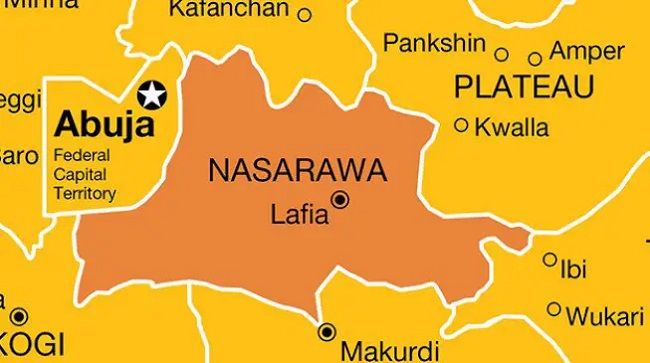
On October 1, 1996, Nasarawa State was birthed from the old Plateau State, carrying the collective aspirations of a people eager for self-determination and good governance. Yet, as we reflect on that dawn of autonomy, we must acknowledge the architects who turned a decree into a reality.
The vision of our founding fathers was first carried on the shoulders of the Late officer and gentleman Wing Commander Abdullahi Ibrahim, the pioneer Military Administrator, and his youthful and dedicated team of trailblazers who served as the state’s first frontline of leadership.
History must record that these men and women did not inherit a finished “map”; they built one from the scratch. They were foundational men of history chosen by grace.
Operating without the intoxicating perks of power that today’s politicians view as a birthright, Ibrahim and his cabinet functioned in a state of “official squatting.”
They worked from borrowed garages, sat under trees to draft policies, and shared basic amenities in makeshift quarters, old cars but truly determined.
From the strategic communications of Mike Omeri (Commissioner for Social Development Youths, Sports and Culture, then Information. Youth and Sports and later Commissioner of Works, Housing and Transport) and the administrative grit of Alhaji Hussaini Zanwa Akwanga after Mr. Jonah Ogbole and Otaki Oyigbenu (Secretaries to the State Government), to the foundational educational reforms of late Alh. Abubakar Kana (Commissioner for Education) USA Malami in Industry, Nasir Kwara Finance and the legal frameworks of late Barrister Mark Idakula, Rebecca Umaru. Similarly, the state also enjoyed the experience of its sons like Alh. Muhammadu Sabo and the Late ebuluent Alhaji Hamza Elayo. These ladies and gentlemen were to prove that the “Man” is always more important than the “Office.”
Supported by pioneers like Mr. Silas Dachor and a horde of permanent secretaries like Mustapha Galadima, Timothy Anjide, Amos Akawu, John Chinchan. Philip Dada among several others, the State at take off, benefitted from the disciplined coordination and disposition of other military personnel who were not just officials; they were the first-responders of our statehood, building a government where none existed.
This spirit of dogged determination was handed over to the civilian era in 1999, where Senator Abdullahi Adamu (Turakin keffi, Oloto of Agwada and Aare Obateru of the source), became the first civilian governor.
Adamu’s tenure was marked by laying the primary bricks of our institutional house, from the Nasarawa State University to the expansion of healthcare. The relay continued with the Late Alhaji Aliyu Akwe Doma (Madaucin Doma and Ajiyan Keana), a seasoned administrator who brought a focus on rural development and food security as well as Alh. Tanko Almakura.
Together, these leaders proved that while the zones they came from were a matter of geography, their impact was a matter of capacity.
The leader who takes the baton in 2027 will not be starting from a garage, but from a significantly elevated economic platform. Under the current administration’s Nasarawa Economic Development Strategy (NEDS), the state has seen a radical transformation in its fiscal health.
As of the 2025 fiscal year, Nasarawa’s Internally Generated Revenue (IGR) has seen a meteoric rise, with projections comfortably crossing the ₦25 billion mark. Driven by the lithium mining boom and the agribusiness surge, the 2025 budget of ₦213 billion represents a high-stakes legacy.
The next “Man” for Nasarawa must be an economic technician capable of managing this multi-billion naira portfolio without losing the “garage-era” focus on the common man.
Today, the obsession with “where a man comes from” threatens to overshadow this massive economic potential. The APC leadership’s recent move to shield incumbents with automatic tickets is framed as a search for stability, but it risks institutionalizing a “Cold Shoulder” to merit.
When we prioritise a candidate’s senatorial zone over his track record, we settle for a “Political Map” that leads us away from the dreams of our founders.
If a leader knows his seat is guaranteed by his “coordinates” rather than his “competence,” the incentive to remain accountable to the grassroots vanishes.
Nasarawa cannot afford to trade the institutional building of the past for an “Abuja Shadow” that is disconnected from the soil.
The legacy of our past leaders teaches us that Nasarawa was built on sacrifice and service, not just geographical turns. As we look toward the 2027 horizon, the voters must demand a leader who embodies that founding essence—someone who sees the office not as a prize for his “zone,” but as a platform for a remedy.
It is time to stop drawing lines on a map and start looking for the man who can offer the capacity Nasarawa deserves.
It is also high time the state government corrects the record of history by immortalizing the pioneers like Abdullahi Ibrahim and his core team.
A state that fails to name its streets after its architects will eventually lose its way in the journey towards the land of our dreams which Nasarawa State symbolizes.