


 News Editor
By Ibrahim Nasiru
“Power is a guest that stays for a night; respect is a monument that lasts forever.”
When a public official jokes about shooting a journalist on national television, he isn’t just threatening a man; he is declaring war on the mirror.
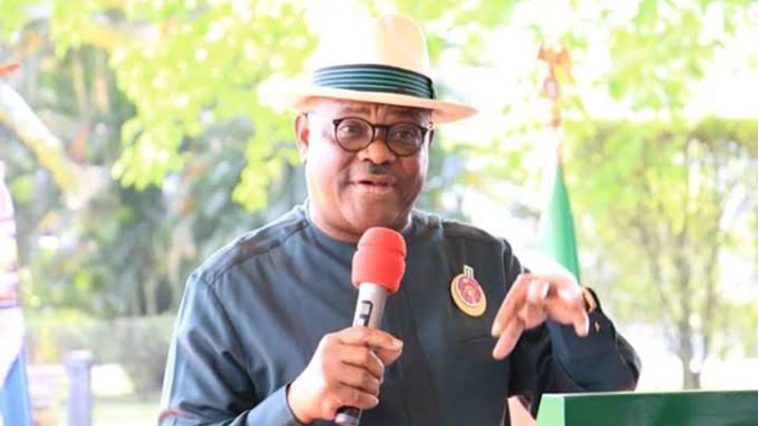
The recent “Good Friday” outburst by FCT Minister Nyesom Wike—where he claimed he would have broken his TV screen to shoot Channels TV anchor Seun Okinbaloye—marks a dangerous descent in our national discourse.
While Wike’s aides have since scrambled to label the remark as “figurative” or “hyperbolic,” the damage is not easily walked back.
Words from a sitting Minister do not simply float; they land with the weight of authority and the chill of a threat.
Wike’s grievance stemmed from Okinbaloye’s analysis of the shrinking opposition space and the potential drift toward a one-party state.
For Wike, this was an “unprofessional” overstep, but in a democracy, the journalist’s role is to ask the uncomfortable questions that those in power would rather leave unanswered.
To meet that analysis with violent imagery—even in jest—is a deliberate attempt to coerce critics into silence.
As we have seen in the broader structural collapse of the political landscape, by introducing the threat of physical harm into the media space, Wike is adding a psychological layer to this crisis.
Such rhetoric normalizes aggression and creates a “war-like” atmosphere where dissent is treated as treason.
Nigeria’s media has often given Wike a wide latitude, captivated by his colorful delivery and “nuisance value.” But as veteran observers have noted, dealing with such figures requires an arm’s length.
When the guardrails of decency are ignored, the result is an environment where a Minister feels immune enough to attack the very press that gave him a platform.
Nations are shaped not just by their policies, but by the character of those who implement them. While Wike prides himself on his “loyalty” and “steel,” true leadership requires the temperament to handle criticism without reaching for a metaphor involving a gun.
As we look toward the 2027 cycle, we must ask: Are we building a democracy based on debate, or a “theatre of war” where the loudest bully wins?
If we allow the language of violence to become our political currency, then the house won’t just fall—it will burn.
Chief Ibrahim Nasiru
A Public Affairs Analyst writes from Abuja