



 News Editor
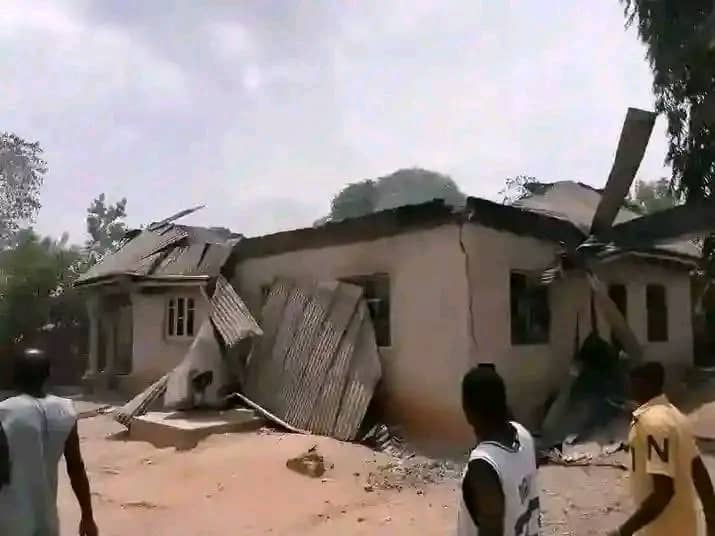
The violence sweeping Borgu, Agwara, Kaiama, and Baruten Local Government Areas of Nigeria has escalated far beyond localised banditry. Evidence from attack patterns, survivor testimonies, and community intelligence reveals a calculated strategy aimed at terrorising populations, forcibly displacing indigenous communities, and seizing control of land believed to contain valuable natural resources. Terror is being deployed deliberately as a weapon to create a self-financing insurgent enclave.
Across the world, similar strategies have been used by armed groups operating in weakly governed spaces. From the FARC in Colombia to the Taliban in Afghanistan and al-Shabaab in Somalia, insurgent movements have repeatedly exploited displacement, forests, and natural resources to fund war, consolidate territory, and undermine state sovereignty.
THE BLOODBATH: CASUALTIES AND COMMUNITIES UNDER SIEGE.
Attacks in Borgu and surrounding areas follow a consistent and terrifying pattern. Armed groups strike at dawn, carry out mass executions, burn homes and farmlands, abduct women and children, and retreat into the forest corridors of Kainji Lake National Park, which provides cover, mobility, and operational depth.
Community-based records and eyewitness testimonies indicate that the true scale of the killings is severely under-reported due to inaccessible terrain, fear of reprisals, and the absence of permanent security presence.
In Woro, more than 200 people have been killed, and 167 women and children have been kidnapped, many of them nursing mothers and infants. Entire family lineages have been wiped out, farmlands destroyed, and survivors forced into forests and neighbouring communities.
In Konkoso, approximately 50 people were killed during coordinated attacks, with dozens of houses razed and the community left largely deserted.
In Kasuwan Daji in the Demo axis, over 40 residents were killed, following repeated raids that left the settlement traumatised and partially abandoned.
In Karonji, community leaders estimate that about 75 people were killed, with homes burned and survivors reporting targeted executions.
Beyond Borgu, surrounding villages in Agwara, Kaiama, and Baruten have experienced repeated incursions resulting in dozens more deaths, mass displacement, and the collapse of normal life.
Taken together, regional death figures now run into several hundreds, while abductions and displacement number in the thousands. These figures remain conservative, as many killings go undocumented and many abducted women and children remain unaccounted for.
Civil society estimates further suggest that Nigeria’s cumulative toll from insurgency, banditry, and extremist violence may now exceed one million lives nationwide, when indirect deaths from hunger, displacement, disease, and collapsed healthcare are included.
CALIPHATE AND RESOURCE FUNDING: THE AL-QAEDA CONNECTION
Community intelligence and regional security assessments indicate that armed groups linked to al-Qaeda are actively positioning the Borgu–Kainji corridor as a potential territorial caliphate. The aim is to clear indigenous populations, dominate forested zones, and exploit suspected lithium and other strategic minerals to finance sustained insurgency.
The extreme brutality of the attacks is intentional. Mass killings and the kidnapping of women and children are designed to break community resistance and force permanent displacement. Once villages are emptied, land becomes easier to occupy, mine, tax, and exploit illegally, transforming terror into revenue.
The forests around Kainji Lake National Park offer ideal conditions for this strategy, combining concealment, mobility, and access to cross-border routes. If allowed to continue, this project would amount to a direct assault on Nigeria’s sovereignty and a serious threat to regional stability.
Global precedents are clear. The Taliban in Afghanistan and ISIS in Iraq and Syria funded their wars through territorial control and resource exploitation. International experience shows that failure to act early allows such enclaves to become entrenched and far more costly to dismantle.
THE HUMAN TOLL: WOMEN, CHILDREN, AND A PEOPLE UNDER EXTERMINATION.
The overwhelming majority of victims in Borgu are civilians, with nursing mothers, pregnant women, and young children disproportionately affected. Entire communities have lost their women, their future generations, and their means of survival.
Despite this, residents continue to resist displacement. Elders, youth groups, and traditional custodians are organising local vigilance and early-warning systems, understanding that abandonment of ancestral land would complete the insurgents’ objective. For the people of Borgu, remaining is not stubbornness. It is survival and resistance.
THE IMPERATIVE OF EXTERNAL VIGILANCE AND A DIRECT APPEAL TO THE UNITED NATIONS.
The scale of the killings, the targeting of women and children, and the clear territorial ambition of the attackers demand urgent external vigilance. Regional intelligence cooperation, sustained forest surveillance, protection of civilians, and decisive action to prevent illegal resource exploitation are no longer optional.
This is a direct appeal to the international community and the United Nations, particularly United Nations agencies responsible for civilian protection, children in armed conflict, and humanitarian response. Borgu’s people are facing mass killing, forced displacement, and systematic abduction, with nursing mothers and infants bearing the greatest burden.
The United Nations has repeatedly warned that ungoverned spaces become breeding grounds for transnational terrorism and human catastrophe. Borgu is now at that threshold.
A NATIONAL AND GLOBAL WARNING.
The massacres in Borgu, Agwara, Kaiama, and Baruten are not isolated crimes. They represent a coordinated campaign to seize territory, finance terror through resources, and challenge the authority of the Nigerian state.
Experiences from the Congo Basin, northern Afghanistan, and the Sahel demonstrate that delayed action allows armed groups to entrench themselves permanently, converting violence into governance and terror into economy.
Immediate, coordinated federal, regional, and international intervention is essential to protect civilians, restore state authority, and prevent the emergence of a militant enclave built on the blood of women and children. Borgu stands on the brink of a historic tragedy, and silence or delay will only multiply the dead.
Zakari Mohammed
Spokesman, 7th Assembly
A Son of Borgu Kingdom.
Call to donate, sponsor posts or for advert placements on our website.
Tel: +234 815 089 8880.
Thank you!