


 News Editor
By David Akoji
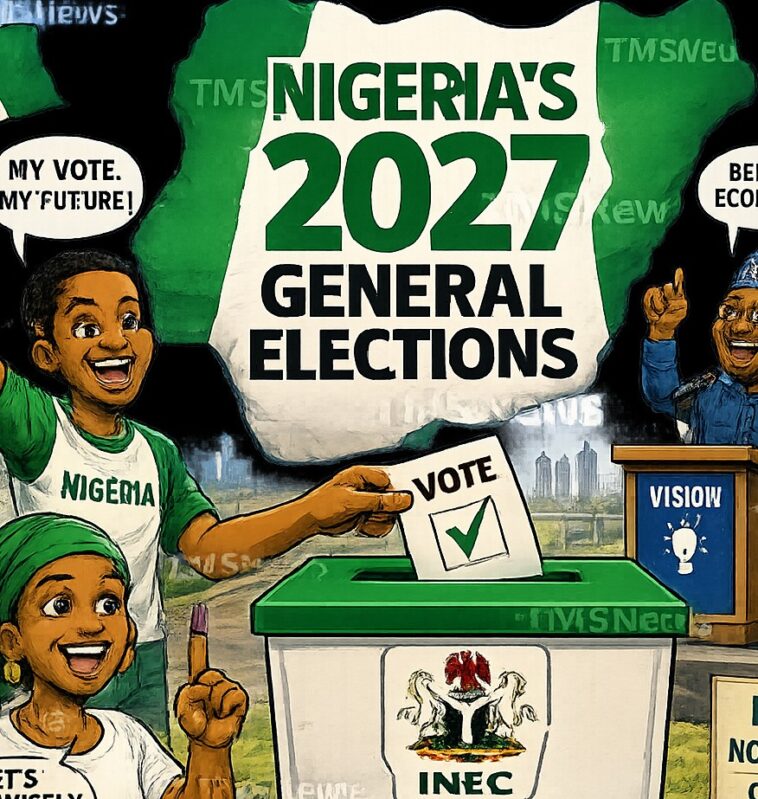
As Nigeria moves steadily toward the 2027 general elections, the contest for power is unfolding as much in the media ecosystem as it is within party structures.
Agenda setting, the ability of the media to shape what citizens consider important, has become a decisive force in determining electoral outcomes in most countries around the world and must not be ignored in the Nigerian context.
First articulated by Maxwell McCombs and Donald Shaw, the theory remains profoundly relevant. As McCombs noted, “the media may not tell people what to think, but it tells them what to think about.” In Nigeria, this influence is increasingly visible as competing actors attempt to define the national conversation ahead of 2027 General elections .
An interrogation of Nigeria’s emerging Agenda Landscape indicate that current Nigerian media narratives are coalescing around four dominant themes:
• Media regulation and freedom (sparked by recent actions of the National Broadcasting Commission)
• Electoral transparency and reform
• Economic hardship and fiscal policy
• Security and humanitarian concerns
These issues are not rising organically, they are being amplified, repeated, and framed in ways that elevate their urgency and thus compel citizens to think about them.
The most recent Nigerian general elections (held in 2023) recorded a voter turnout of approximately 26.7%.
• Specifically, turnout was about 26.71%–26.72% of registered voters
• This translates to roughly 24.9 million voters out of over 93 million registered voters
Key Context
• This was the lowest voter turnout since Nigeria’s return to democracy in 1999
• It marked a decline from about 34.7% turnout in 2019 .
this low turnout is significant because it suggests:
• A gap between agenda setting in the media and actual voter mobilization owing to issues such as:
• Possible issues of trust, apathy, or structural barriers
• A situation where electoral outcomes are decided by a relatively small portion of the population.
TMS News in an editorial recently observed:
“If it leads the news cycle for a week, it becomes a campaign issue. That’s how the agenda is built.”
But Nigeria is not alone in this context . Across Africa and globally, similar patterns reveal how agenda setting is shaping electoral politics in profound ways.
African Comparisons: Shared Patterns, Different Contexts
1. Kenya (2022 Elections): Ethnicity vs Economy
In Kenya’s 2022 elections, media narratives initially revolved around ethnic alliances, a long standing feature of Kenyan politics. However, a strategic shift occurred when candidate William Ruto reframed the campaign around a “bottom-up economic model.”
Media adoption of this framing transformed public discourse. As one Kenyan analyst noted:
“Once the media picked up the ‘hustler vs dynasty’ narrative, it redefined the election.”
This offers comparative insight for Nigeria: Like Kenya, Nigerian politicians are already attempting to reframe debates, particularly toward economic hardship. The difference is that Nigeria’s media landscape is more fragmented, making agenda dominance more contested in the face of media plurality.
Perhaps the most cited case is Kenya’s 2007 elections, where media narratives, especially vernacular radio, amplified ethnic divisions.
• Over 1,100 people were killed
• Approximately 600,000 displaced
• Studies found that hate speech and ethnically framed political messaging significantly contributed to the violence
1. South Africa (2019–2024 Elections): Corruption as Central Agenda
In South Africa, media investigations into “state capture” fundamentally shaped electoral discourse. Coverage of corruption linked to former president Jacob Zuma ensured that governance and accountability dominated elections.
A South African journalist remarked at the time:
“The media didn’t just report corruption, it made it impossible to ignore.”
The comparative insight for Nigeria here is that: while corruption remains a recurring theme in Nigeria’s public discourse, it has not consistently dominated media agendas in the same sustained way. Instead, Nigeria’s agenda appears more fluid, shifting between economy, security, and electoral reform.
1. Ghana (2020 Elections): Peace Narrative and Electoral Stability
In Ghana, media organizations deliberately prioritized peace journalism, emphasizing electoral stability and conflict prevention.
A broadcaster in Accra explained:
“We chose to make peace the headline issue, not conflict.”
Comparative insight for Nigeria:
Nigeria’s media may face similar pressure to emphasize national unity ahead of 2027, especially given rising political tensions. However, balancing peace narratives with sustained polarizing narratives by politicians as well as critical accountability reporting remains a challenge.
Global Comparisons: Advanced Agenda Setting Dynamics
1. United States (2016–2024 Elections): Digital Agenda Domination
In the United States, elections have demonstrated the full evolution of agenda setting into a hybrid system combining traditional media and digital platforms.
During the rise of Donald Trump, social media, particularly X (formerly Twitter) became a direct agenda setting tool. Trump’s posts often dictated news cycles.
A media scholar observed:
“The press no longer sets the agenda alone, the politician can now do it in real time.”
Comparative insight for Nigeria:
Nigeria is rapidly approaching this model. Political actors, influencers, and even citizens are beginning to bypass traditional media gatekeeping, setting agendas directly through digital platforms.
1. United Kingdom (Brexit Referendum): Emotional Agenda Framing
The Brexit referendum offers a powerful example of how emotional narratives, immigration, sovereignty, national identity, can dominate media agendas.
A political commentator noted during the Brexit debates that
“Facts were present, but emotions set the agenda.”
Comparative insight for Nigeria:
Nigerian media is similarly witnessing the rise of emotionally charged narratives, ethnicity, religion, and regional identity, this will intensify as campaigns intensify.
1. India (2019 Elections): National Security Agenda
In India, media coverage following security incidents elevated nationalism and defense to central campaign issues, benefiting incumbent leader Narendra Modi.
Comparative insight for Nigeria:
Nigeria’s persistent security challenges is similarly dominating media narratives, with potential to shape voter preferences toward candidates perceived as strong on security.
Key Comparative Patterns
Across Nigeria, Africa, and the world, several agenda setting patterns emerge:
1. Issue Substitution:
Media shifts focus from one dominant issue to another (e.g., Nigeria’s move from electoral reform to media regulation debates).
2. Narrative Framing:
Labels like “hustler economy” (Kenya) or “state capture” (South Africa) simplify complex realities into digestible political messages.
3. Emotional Amplification:
Issues tied to fear, identity, or survival (security, economy) receive disproportionate attention.
4. Digital Acceleration:
Social media platforms such as Facebook and TikTok are decentralizing agenda setting power.
What are the Implications for Nigeria’s 2027 Elections?
Nigeria’s agenda setting environment is becoming:
• More competitive (multiple actors shaping narratives)
• More volatile (rapid shifts in dominant issues)
• More digital (declining monopoly of traditional media)
A communication scholar in Bingham University, summarized the stakes:
“The election will not just be about who is pitching the best policies, but who controls the narrative about what matters most.”
Nigeria in a Global Agenda Battle
Nigeria’s 2027 elections are part of a broader global pattern where media ecosystems determine political priorities. Yet, the Nigerian case is uniquely complex as it combines elements of ethnic politics (Kenya), corruption narratives (South Africa), emotional framing (UK), and digital disruption (United States).
As Maxwell McCombs emphasized, agenda setting is a shared process involving media, political elites, and the public. In Nigeria, that process is intensifying.
The defining question remains:
Will Nigeria’s 2027 media agenda reflect the real needs of its citizens, will Nigerian Media prioritize narratives of peace and national unity or will the media yield the ground to the strategic priorities of those who control the narrative for negative agenda?
Okocha is associated with the view that agenda-setting in Nigeria is not neutral, but a product of power relations among:
• Media owners
• Political elites
• Economic interests
He argues that:
“The Nigerian media agenda is often a negotiated outcome rather than a purely professional judgment.”
The answer may ultimately shape not just an election, but the future of Africa’s most populous democracy.
David Akoji, is a PhD Student of Mass Communication at Bingham University, Karu Nasarawa State.
Call to donate, sponsor posts or for advert placements on our website.
Tel: +234 815 089 8880.
Thank you!