



 News Editor
By David Akoji
Nigeria’s ongoing battle against terrorism has evolved over the last decade from a predominantly military campaign to a more comprehensive strategy involving intelligence coordination, counter-radicalization, regional cooperation, and policy reforms. At the centre of this evolving architecture is the National Counter Terrorism Centre (NCTC), a strategic institution designed to harmonize the nation’s response to extremist threats.
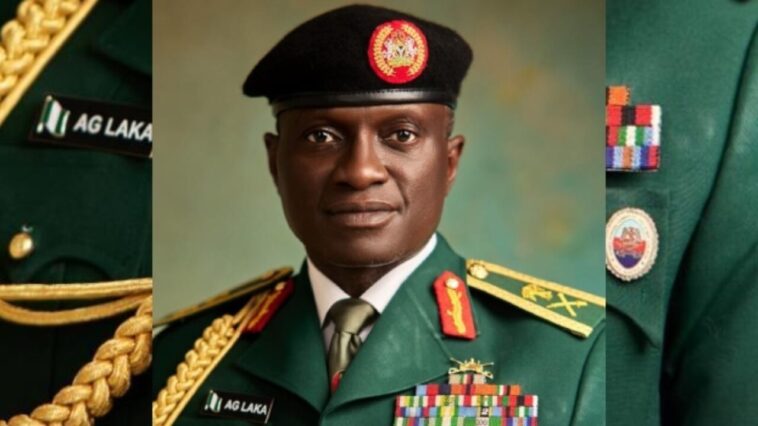
Since his appointment in March 2024 by President Bola Ahmed Tinubu, Major General Adamu Garba Laka has served as the National Coordinator of the NCTC. His tenure has come at a time when Nigeria faces complex security threats ranging from insurgency in the North-East to violent extremism spreading across the Sahel region.
Nearly two years into his stewardship, analysts continue to X-ray the effectiveness, limitations, and future trajectory of his leadership.
Nigeria’s Counter-Terrorism Architecture
The NCTC operates under the supervision of the Office of the National Security Adviser and functions as the central coordinating hub for counter-terrorism policy and operations in Nigeria.
The Centre was established as part of Nigeria’s broader counter-terrorism strategy to improve synergy among security and intelligence agencies such as the Department of State Services, the Nigerian Armed Forces, the Nigeria Police Force and other institutions responsible for national security.
The creation of the NCTC itself was a recognition that the fight against terrorism required a multi-agency and intelligence driven approach, rather than fragmented operations by individual institutions.
Security experts often note that Nigeria’s earlier counter-terrorism responses suffered from duplication of roles, intelligence silos, and weak coordination among agencies. The NCTC was designed to correct these structural weaknesses.
Examining the Context of Laka’s Appointment:
When General Laka assumed office, Nigeria was still grappling with multiple security threats. The insurgency launched by Boko Haram and later complicated by the rise of the Islamic State West Africa Province had already lasted over a decade.
Beyond the North-East, violent extremist groups were exploiting porous borders and weak governance structures across the Sahel to expand their influence.
Security analysts observe that, Laka’s appointment reflected the federal government’s intention to strengthen institutional coordination and strategic planning in the counter-terrorism space.
The role of the NCTC should not be misconstrued as replacement for the military or intelligence agencies but to provide strategic direction. The effectiveness of the Centre depends largely on the leadership capacity of the National Coordinator to enhance synergy among the security and intelligence agencies.
Strategic Initiatives Under Laka’s Leadership
One of the most notable developments during Laka’s tenure has been the renewed emphasis on policy-driven counter-terrorism strategies.
Counter-Terrorism Strategic Plan (2025–2030)
Under his leadership, Nigeria launched the National Counter-Terrorism Strategic Plan (2025–2030), which outlines a long-term framework for addressing violent extremism. I personally participated in the several review sessions that the draft plan was put through.
The strategy focuses on five key pillars:
• prevention of radicalization and violent extremism
• intelligence gathering and information sharing
• disruption of terrorist financing networks
• strengthening border security
• rehabilitation and reintegration of former fighters.
Security scholar Jakkie Cilliers of the Institute for Security Studies has argued that long-term policy frameworks are critical in combating terrorism.
“Terrorism cannot be defeated solely through military means. It requires sustained governance reforms, intelligence coordination and community engagement.”
The strategic plan therefore attempts to move Nigeria beyond purely kinetic operations toward a whole-of-government approach.
Strengthening Counter-IED Capacity:
Another significant focus during Laka’s tenure has been the strengthening of Nigeria’s ability to respond to improvised explosive devices (IEDs), a tactic frequently used by insurgent groups.
The NCTC has organized training workshops and capacity-building programmes for security agencies involved in bomb disposal and forensic investigations.
These initiatives are designed to improve the detection, prevention, and response to explosive threats across the country.
Experts believe such technical capacity is crucial in counter-terrorism operations, particularly in insurgency affected regions.
International and Regional Cooperation:
Recognizing the transnational nature of terrorism, General Laka has also emphasized international cooperation.
Nigeria has deepened its collaboration with regional partners within West Africa and the Sahel to improve intelligence sharing and joint security initiatives.
This is particularly important because extremist groups often exploit porous borders between Nigeria, Niger, Chad and Cameroon.
Regional cooperation has therefore become a cornerstone of Nigeria’s evolving counter-terrorism policy.
Achievements and Positive Assessments:
Supporters of General Laka’s leadership like my self, highlight several accomplishments.
Institutional Coordination
Perhaps the most significant achievement has been the strengthening of institutional coordination among Nigeria’s security agencies.
Security analyst Kabiru Adamu notes that the NCTC has increasingly served as a platform for intelligence integration.
“The Centre has improved information flow among agencies. While challenges remain, coordination is better than what existed a decade ago.”
Policy Reforms
The development of long-term counter-terrorism frameworks under Laka’s leadership has also been widely acknowledged.
These frameworks aim to institutionalize Nigeria’s response to terrorism and reduce the tendency for ad-hoc policies.
Capacity Building:
Training programmes organized by the NCTC have strengthened Nigeria’s technical capacity in areas such as counter-IED operations, intelligence analysis, and crisis response.
Criticisms and Structural Limitations:
Despite these efforts, General Laka’s tenure has not been without criticism.
Continued Terrorist Attacks
One of the most persistent criticisms is that terrorist attacks have not completely disappeared, particularly in parts of the North-East North- Central and North-West.
While security experts acknowledge that terrorism is a complex problem that cannot be solved overnight, many Nigerians remain impatient with the pace of progress as loved ones are lost quite frequently.
Institutional Constraints:
Another major challenge is the limited operational authority of the NCTC.
Unlike the military or intelligence agencies, the Centre primarily performs a coordinating role. As a result, its effectiveness often depends on the willingness of other institutions to cooperate.
Funding and Resource Challenges:
Like many security institutions in developing countries, the NCTC must operate within limited financial and logistical resources.
These constraints can affect the implementation of long-term strategic plans if the NCTC is not better funded than it currently is.
Lessons from Previous Counter-Terrorism Efforts
Observers often compare the current approach to earlier phases of Nigeria’s counter-terrorism campaign.
During the early years of the Boko Haram insurgency, the response was dominated by military operations. While these operations achieved important tactical victories, analysts argue that they did not sufficiently address the underlying drivers of extremism.
The emergence of institutions such as the NCTC therefore reflects an attempt to institutionalize counter-terrorism governance.
General Laka’s tenure can thus be viewed as part of a broader transition in Nigeria’s security strategy.
The Road Ahead
Looking forward, the effectiveness of the NCTC will depend on several factors:
• sustained funding and political support from the federal government
• improved intelligence integration among security agencies
• stronger community-based counter-radicalization programs in collaboration with the National Orientation Agency
• deeper regional cooperation in the Sahel.
Experts also emphasize the importance of addressing socio-economic conditions that contribute to radicalization, including poverty, unemployment, and weak governance.
Major General Adamu Garba Laka’s tenure as National Coordinator of the National Counter Terrorism Centre represents an important phase in Nigeria’s evolving security architecture.
His leadership has focused on strengthening institutional coordination, developing long-term policy frameworks, and enhancing regional cooperation against terrorism.
However, structural limitations, resource constraints, and the complex nature of extremist threats continue to challenge Nigeria’s counter-terrorism efforts.
Ultimately, the success of Laka’s tenure will be measured not merely by policy initiatives but by whether Nigeria can achieve sustained reductions in terrorism and greater security for its citizens.