



 News Editor
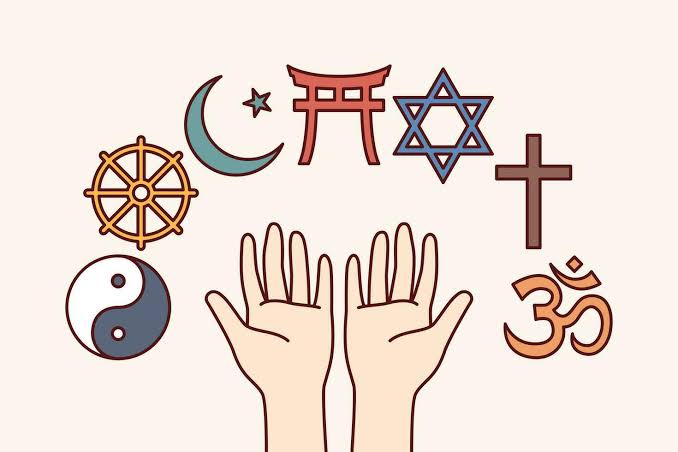
In today’s world and societies, people treat “religion” and “faith” as the same thing, but are they? Religion is a human system; a system of rituals, customs, laws, institutions and traditions built to organize worship and guide moral life. Connection with God is the living, personal relationship between a person and their Creator. When the structure becomes the focus, it often overshadows the relationship it was meant to serve. For this reason, people should find it necessary to step down the emphasis on external religion and step up the pursuit of a direct connection with God Almighty in truth. This is so because, any day focus moves to truth with God at the background, the world would be healed instantly of all infirmities created by humans.
Religion by itself can easily become a substitute for relationship. Systems preserve knowledge, create community and give rhythm to worship. But when the system becomes the end, people attend every service, recite every prayer and keep every rule, yet remain distant from the God those practices point to. The question shifts from “What is God asking of my heart?” to “Did I perform the ritual correctly?” At that point, religion turns into performance, acting and drama, but stepping down that performance allows space for honesty. It lets a person speak to God without hiding behind correct words or perfect posture, just as a child speaks to a father—imperfectly, but directly and still getting attention.
A direct connection with God addresses the heart, not just outward behaviour. Religion often regulates what is seen: what to wear, what to eat, what to avoid etc. These matters are not irrelevant, but they are incomplete. The consistent concern across scriptures is with the state of the heart—pride, envy, forgiveness, trust and love. Behaviour can be changed by social pressure or fear of judgment without the heart ever changing. When a person is genuinely connected to God, His fear takes root in the heart. The fear of God is not terror, but a deep reverence and awareness that He sees, He judges, and He holds every life sacred. Where that fear exists, a person cannot easily lie, cheat, swindle, rig, oppress or take life lightly.
This is why, when there is a true connection with God Almighty in truth, things do not degenerate the way they have in Nigeria today. Life is the most cherished property of God in humans. To harm it unjustly is to strike at what He values most. Yet we see a country where human life is cheapened—by kidnapping, banditry, ritual killings, police brutality and the everyday indifference to people suffering. Much of this happens in a land where religious buildings are full every Friday and Sunday and where religious slogans are on lips and billboards. On a single street, it is difficult to count the number of religious houses and if a graph were to be drawn, it seems like as these houses increase, crime also goes up correspondingly. The disconnect is clear: people have religion, but many do not have a living connection with God, no humanity. Without that connection, there is no fear of God to restrain the heart, and without the fear of God, society slides into cruelty and lawlessness.
A personal connection with God also removes unnecessary barriers between the person and the Creator. Many religious systems place layers of mediation—clergy, scholars, hierarchies—between people and God. Guidance is valuable, but when those layers become gatekeepers, they create the impression that God is distant and only reachable through approved channels. When a person knows God directly, they do not need permission to pray, repent or seek mercy. That direct access produces accountability. You cannot hide your actions from the One that made you and that awareness changes how you treat others.
Furthermore, a focus on connection shifts the emphasis from identity to purpose. Religion gives identity: “I am a Muslim,” “I am a Christian,” “I am a traditionalist.” Identity provides belonging, but it can become tribal. People defend the label more than they live the values behind it. A personal connection with God reorients the question from “What group am I in?” to “Who am I becoming?” It moves a person from defending a brand to pursuing justice, mercy, and the sanctity of life. When purpose is clear, division over secondary matters loses its grip and faith becomes less about winning arguments and more about living rightly.
Finally, connection sustains people when institutions fail. Religious institutions are run by humans and humans fail. Scandal, corruption and abuse including deceit have led many to abandon faith entirely because their faith was tied only to the institution. A person whose anchor is their relationship with God can weather institutional failure. The relationship remains, even when leaders fall short. And with that relationship comes the fear of God that restrains evil, even when human laws are weak or corrupt.
Stepping down religion does not mean abandoning community, ethics or worship. It means reordering priorities. Rituals, gatherings and moral codes are valuable when they serve the relationship with God. When they replace it, they become empty. A strong connection with God makes community healthier. People secure in their relationship with their Maker are less likely to use religion for control or pride. They come to community to give, to protect life and to uphold justice.
In the end, religion without connection is like a map without a journey. It shows the route, but the traveler never moves. If Nigerians, and people everywhere, would step down the focus on outward religion and step up a personal, honest connection with God Almighty, the fear of God would return to the heart. And where the fear of God returns, human life is honoured again, justice is pursued and society stops degenerating. Many people are religious but restless. What is often missing is not more rules, but more relationship. And that relationship is open to anyone willing to seek it—directly, sincerely and without waiting for permission.
*I am Dr Frank Peter Ombugadu still being modest in adding value and substance to the reservoir and storehouse of knowledge and education*
Call to donate, sponsor posts or for advert placements on our website.
Tel: +234 815 089 8880.
Thank you!