


 News Editor
By David Akoji
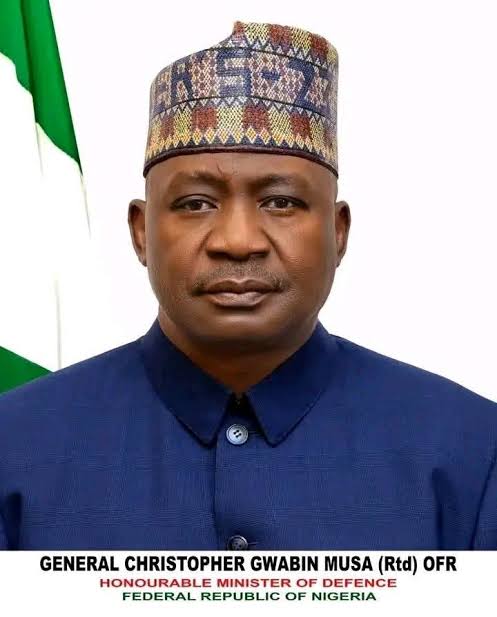
In recent days, a wave of criticism has trailed the participation of Nigeria’s Honourable Minister of Defence, General Christopher Gwabe Musa (rtd), in President Bola Ahmed Tinubu’s official visit to the United Kingdom, as well as his presence at the All Progressives Congress (APC) National Convention. Critics, particularly across social media and a minute segment of the commentariat, have questioned the propriety of such engagements at a time when Nigeria continues to grapple with complex and evolving security challenges.
At first glance, these criticisms may appear rooted in legitimate concern to those who are not deeply discerning. Indeed, Nigeria’s security situation, marked by insurgency in the North-East, banditry in the North-West, and pockets of sheer criminality and communal unrest elsewhere, demands urgency, focus, and sustained leadership. However, a deeper and more informed reflection reveals that much of the criticism stems from a fundamental misunderstanding of the role of a Defence Minister in a modern democracy.
The office of the Minister of Defence is not that of a field commander. It is a strategic, policy-driven position designed to provide civilian oversight, institutional coordination, and international defence diplomacy. Operational and tactical responsibilities lie squarely with the Service Chiefs and theatre commanders who manage day-to-day military engagements. To expect the Defence Minister to remain physically tethered to operational theatres is to conflate governance with command, a misreading that risks undermining the very architecture of democratic civil military relations.
General Musa’s presence during the President’s UK visit must be understood within this broader framework of defence diplomacy. In an era where security threats are transnational, terrorism, arms trafficking, cyber warfare, and intelligence asymmetries, no nation can afford to operate in isolation. Bilateral engagements with key global partners such as the United Kingdom are critical for intelligence sharing, capacity building, military training, logistics support, and technological transfer.
Indeed, the defence component of such high-level visits often yields outcomes that are not immediately visible to the public but are crucial to long-term national security. From discussions on counterterrorism cooperation to potential defence procurement frameworks and training partnerships, these engagements form the backbone of sustainable security architecture. To exclude the Defence Minister from such a visit would be to diminish Nigeria’s seriousness in defence negotiations.
Equally, criticism of the Minister’s attendance at the APC National Convention ignores the political reality of governance. Ministers are not apolitical actors; they are appointees within a democratic system who, while discharging national duties, remain stakeholders in the political process that shapes policy direction. Participation in party activities, particularly at a strategic level, does not equate to dereliction of duty, provided that governance responsibilities are not compromised.
Beyond the optics, it is important to interrogate the record. Since his appointment, General Musa has been instrumental in strengthening inter agency coordination, a long standing weakness in Nigeria’s security framework. Under his watch, there has been a more integrated approach to intelligence sharing among the armed forces and other security agencies. Efforts at restructuring procurement processes, improving troop welfare, and enhancing operational logistics have also gained traction under the watch of this Minister of Defence. The increased traction in this direction is an outcome of his extensive experience in various theatres while in service to his fatherland.
Furthermore, there has been a noticeable shift toward a more proactive engagement with Nigeria’s international partners. This includes renewed defence cooperation agreements and increased participation in joint training exercises, developments that are essential in modernising Nigeria’s military capabilities.
None of this is to suggest that Nigeria’s security challenges have been fully resolved. Far from it. But to attribute ongoing security issues to the physical presence, or absence of the Defence Minister at specific events is to oversimplify a deeply complex reality. Security outcomes are the product of multiple variables: historical grievances, socio-economic conditions, regional instability, and institutional capacity, among others.
Public accountability is essential in a democracy, and scrutiny of public officials should be encouraged. However, such scrutiny must be informed, measured, and grounded in an accurate understanding of institutional roles. Criticism that is based on optics rather than substance risks distracting from the real issues and, worse, eroding public confidence in governance structures and thus playing into the hands of the enemies of our country.
In the final analysis, General Christopher Musa’s participation in the President’s UK visit and the APC National Convention should not be viewed through the narrow lens of absence from the domestic stage. Rather, it should be seen as part of a broader continuum of responsibilities, strategic, diplomatic, and political, that define the office he holds.
Nigeria’s security challenges require not just boots on the ground, but also partnerships across borders, coherence at the policy level, and alignment within the political leadership. It is within this multidimensional space that the Defence Minister operates, and must be judged.
David Akoji, is Director, Special Duties/States Operations at the National Orientation Agency.
Call to donate, sponsor posts or for advert placements on our website.
Tel: +234 815 089 8880.
Thank you!