



 News Editor
From Dooshima Terkura, Makurdi
Health workers and frontline leaders in Benue State have been empowered to take a more active role in transforming harmful social norms that continue to hinder access to maternal healthcare and HIV services across communities.
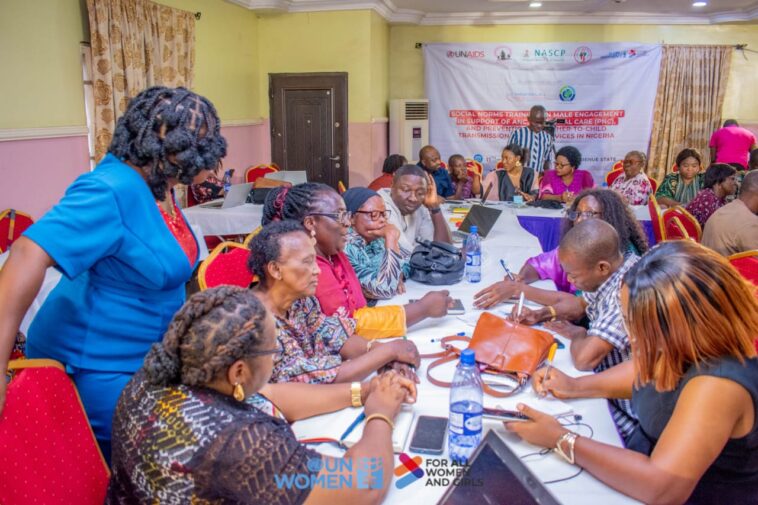
The charge was given by the Country Representative of UN Women, Beatrice Eyong, at a two-day Social Norms Training for health workers and other frontline leaders involved in the HIV response in Makurdi. The training focused on strengthening our response across the HIV continuum through meaningful male engagement, as well as promoting meaningful involvement in ANC, Postnatal Care, and PMTCT in Makurdi, Benue State.
Eyong who spoke through the Acting Deputy Representative, Mrs. Patience Ekeoba, described health workers as more than caregivers, noting that they are trusted influencers and agents of social change whose actions and words can either reinforce positive health behaviours or sustain harmful cultural practices.
She stressed that improving maternal and child health outcomes goes beyond medicines and clinical procedures, adding that beliefs, relationships and community expectations also shape healthcare decisions.
According to her, harmful social norms continue to prevent many women from accessing timely antenatal care and postnatal services, while stigma surrounding HIV still discourages testing, treatment and adherence to medication.
She noted that many women are unable to make independent decisions concerning their health due to unequal power relations within households, while men often remain absent from maternal healthcare processes because societal systems have failed to deliberately involve them.
Eyong expressed concern over abysmal level of male participation in maternal and child healthcare in Nigeria citing findings from a recent research conducted by UN Women, discovering that only 3.4 percent of men accompany their spouses to clinic visits, while overall male involvement in maternal healthcare stands at 13.8 percent.
She urged participants to dismantle social norms that discourage men from participating meaningfully in antenatal care, postnatal support and Prevention of Mother-to-Child Transmission (PMTCT) services.
According to her, meaningful male engagement should not be limited to symbolic appearances but should involve men becoming advocates for maternal health, supporters of women during pregnancy and childbirth, and champions against HIV-related stigma in their communities.
She said “Public Health and HIV Prevention and Care have taught us an important lesson over the years: improving health outcomes is not only about medicines, equipment, or clinical protocols, it is also about people, relationships, beliefs, and the social norms that influence decisions and behaviors.
“These social norms often determine whether a pregnant woman attends her first ANC visit early, whether she completes her postnatal appointments, whether a family accepts HIV testing and treatment, and whether a person living with HIV feels supported or stigmatized.
“As health workers, you are not only providers of care, you are trusted influencers, role models, and agents of change. Every interaction you have with a client, a family member, or a community leader has the power to reinforce positive norms or challenge harmful ones.
“Some women still struggle to access Antenatal Care (ANC) because decision-making within households often excludes them or limits their autonomy. Many mothers do not receive adequate postnatal care because cultural expectations place less emphasis on maternal wellbeing after childbirth.
Also speaking, the Associate Director and Head of Prevention Services at APIN Public Health Initiatives, Dr Olubunmi Pitel, said APIN is happy to collaborate with UN Women in conducting the training. Pitel, who spoke on benefits of men in pregnancy, ANC, PNC, PMTCT and GBV, sad leaving men behind in maternal and child health services is a national problem and expressed optimism that the narrative will change positively after the event.
She said it was time for a multi sectoral mandate and approach believing that an informed health workforce and stakeholders would drive male engagement in ANC, PNC and PMTCT for better health outcomes for mothers and their children.
The State Program Lead and Head of Office Benue State, APIN Public Health Initiatives, Mr Enebi Achinugu said the office has over 200 PMTCT sites to bring services closer to the people. According to him, delayed husband consents has led to delayed access to healthcare and treatments for most women as well as lack of retention urging participants to do their part to change the trend.
The Director General of Benue State Bureau for International Cooperation and Development (BICD) Leo -Angelo Viashima applauded UN Women and partners for their initiative noting that they would be adding to about 10 UN organizations working in the state.
Viashima said Benue State under Governor Hyacinth Alia is happy with their concept and would be glad to collaborate to ensure that what they dish out is in line with the choiced vision of the state government to meet the needs of the Benue people. He called for sincerity of purpose, urging them to also prioritize media training for journalist as they play critical roles in advancing male role in health outcomes.
The facilitators, Martin-Mary took participants through packages and topics including Overview of Gender Masculinity and Socio-Cultural Norms in Nigeria, Male Involvement in Family Healthcare in Benue State, Challenges and Benefits, Common Myths Identified, Alternative Messages Practice, Addressing Myths and Misconceptions about Male Involvement: Case Studies and Roles Played while the Executive Secretary Nigeria Network of Religious Leaders Living with or Personally Affected by HIV/AIDS (NINERELA+, Amber Itohan spoke on Traditional Leadership and Family Health: Customary Roles and responsibilities, Faith in Action: Institutionalizing Make Engagement in SGBV in Nigeria among others.
Martin-Mary, particularly urged health organizations and CSO to redesign their visibility materials with information and inscriptions that encourage and celebrate male engagement in ANC, PNC and PMTCT.
Some of the participants, Mrs Jane Adzuu, Fidelis Kwaghchimin and Ozoko Montfort all appreciated UN Women and partners for the training pledging to do their part to encourage more male engagement in ANC, PNC, PMTCT services in Benue state.
Call to donate, sponsor posts or for advert placements on our website.
Tel: +234 815 089 8880.
Thank you!