



 News Editor
By David Okpashi
Nigeria’s democratic journey has produced many politicians, campaigners and rhetoricians. However, it has produced far fewer individuals whose careers demonstrate sustained competence in administration, finance, institution-building and national cohesion, anchored on strong character and integrity.
This distinction is particularly important in a nation grappling with insecurity, economic fragility, elite distrust and institutional decay. For Nasarawa State, therefore, the question ahead of 2027 is no longer simply who can win an election, but who possesses the capacity, experience and vision to govern effectively.
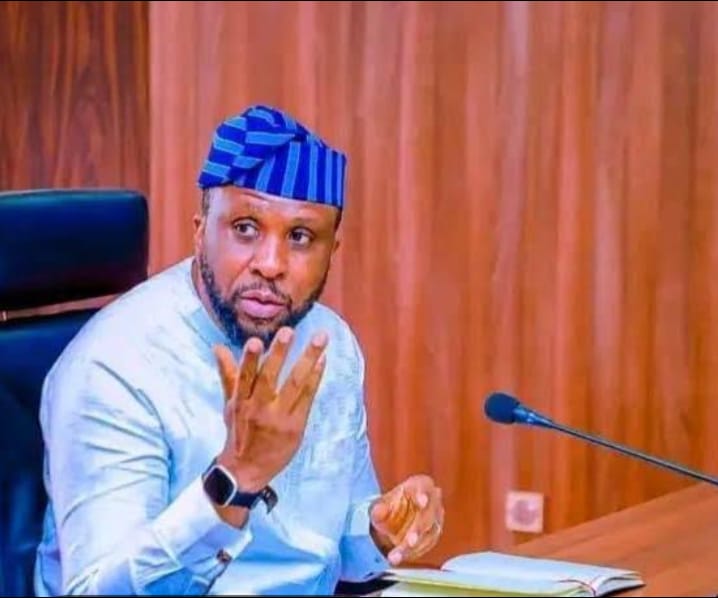
It is within this context that the governorship aspiration of Rt. Hon. Jonathan Gbefi Gaza deserves serious statewide consideration.
His profile presents something increasingly rare in Nigerian and Nasarawa politics: a lawmaker par excellence with demonstrable executive experience spanning the public sector, private enterprise, development institutions, national policy platforms and the global arena. Whether or not one agrees entirely with his policy prescriptions, the depth of preparation reflected in his professional trajectory is difficult to overlook.
The central argument for Gaza’s suitability for the governorship is not built around ethnic populism, religious mobilisation or emotional grandstanding. Rather, it rests on competence, exposure, discipline, institution-building and patriotism.
At a time when Nasarawa State is confronted with policy inconsistencies, fiscal instability, weak governance structures and declining public confidence, Jonathan Gaza represents a generation of leadership shaped by capabilities in economic management, governance and administration rather than agitation.
His career trajectory suggests familiarity with the complex mechanics of managing institutions and systems across multiple sectors of the economy—experience the state urgently requires.
His emergence from an established intellectual tradition is particularly significant. Raised in a family rooted in education and public service, educated in reputable institutions and refined through elite global executive exposure, Gaza embodies a combination of local grounding and international experience. This is important because modern governance increasingly demands leaders who understand both the realities of their immediate environment and the opportunities and challenges of the wider world.
More importantly, Rt. Hon. Jonathan Gbefi Gaza’s record indicates that he assumed executive responsibilities at a relatively young age. Such responsibilities demanded strong leadership skills, strategic planning, hard work, discipline and the ability to coordinate the operations of a large institution operating across diverse sectors of the economy.
Nasarawa State today needs more than political charisma. It equally needs managerial competence and administrative acumen.
The tragedy of the state is that politics has often overshadowed governance. Electoral victories have too frequently become disconnected from administrative competence. Yet the demands of modern statecraft require deft management, the energy and dynamism to undertake far-reaching reforms in the economy, human development, security architecture, digital transformation and internal economic diplomacy.
These challenges require leaders who think in systems, understand institutions and appreciate the relationship between policy formulation and effective implementation.
Gaza’s manifesto, which is expected to be made public in the coming days, reflects this orientation. Across governance, economic diversification, industrialisation, micro, small and medium enterprises (MSMEs), education reform, digital innovation, healthcare restructuring and security integration, there are indications of structured policy thinking rather than improvised populism.
Particularly noteworthy is his emphasis on governance culture. In a state where corruption is widely perceived to have become systemic and normalised, his repeated focus on transparency, meritocracy, e-governance, decentralisation and institutional accountability suggests an understanding that Nasarawa’s greatest challenge may not simply be a shortage of resources, but the failure of systems.
Equally compelling is Gaza’s apparent commitment to practical transformation. His emphasis on agriculture, industrial clusters, export-led manufacturing, power generation, MSME financing, digital innovation and infrastructure development reflects a broad understanding of what it takes to industrialise a state.
His recognition that unemployment fuels insecurity is particularly important. Nasarawa cannot sustainably defeat insecurity while large numbers of its young people remain economically stranded without meaningful opportunities.
His industrial vision also speaks to an important but often neglected reality: the state cannot consume its way into prosperity; it must produce its way there.
His repeated references to manufacturing, agro-processing, solid minerals and export competitiveness suggest a production-oriented development framework rather than an economy built on dependency.
Critics may reasonably argue that technocratic brilliance does not automatically translate into political success. Governance is a deeply political enterprise requiring coalition-building, political stamina, electoral machinery and effective grassroots mobilisation.
That criticism may be fair. However, it is equally important to note that Rt. Hon. Gaza is no stranger to the political terrain, having competed vigorously in the 2026 primaries of his party.
Citizens of Nasarawa State must also ask whether their historical preference for conventional politicians has delivered the outcomes they desire. The state’s persistent challenges, particularly the growing concerns over insecurity, economic hardship and institutional weaknesses, increasingly strengthen the argument that technical competence and institutional experience should count more significantly in the selection of political leaders.
Another important dimension of Jonathan Gaza’s profile is his apparent pan-Nigerian outlook. At a time when identity politics threatens social cohesion, his emphasis on unity, bridge-building and detribalised leadership carries considerable significance.
The survival and progress of Nasarawa may ultimately depend on leaders capable of transcending ethnic anxieties while respecting the cultural diversity that defines the state.
His proposed security framework also demonstrates strategic breadth. Rather than viewing insecurity solely through the application of kinetic force, it incorporates economic interventions, psychology, diplomacy, border management, intelligence systems and social reorientation.
Whether every aspect of the proposed framework proves fully implementable or not, its underlying philosophy reflects a multidimensional understanding of modern security challenges.
In many respects, Hon. Jonathan Gbefi Gaza represents the possibility of restoring leadership to its essential attributes: foresight, intellect, discipline, preparation and seriousness of purpose.
His profile evokes an older tradition of public-minded elite leadership, shaped by education, policy engagement, institution-building and a vision anchored on sustainable state development rather than performative populism.
The challenge before Nasarawa today is not a lack of potential, but the absence of organised competence at the scale required to transform that potential into prosperity.
The state needs leaders with a deep understanding of applied economics and financial engineering, capable of confronting poverty, unemployment and the rising cost of living through practical and sustainable solutions.
It needs leaders with the willingness and readiness to make personal sacrifices for the collective good, promote social cohesion, strengthen peace and stability, and uphold justice.
It needs leaders who can attract and engage global capital without compromising the state’s interests, and who possess the capacity to restore public confidence in government institutions.
These are the qualities that should shape the conversation about the next governor of Nasarawa State.
Ultimately, the 2027 governorship contest should be about more than political calculations, familiar alliances or the pursuit of power. It should be an opportunity for the people to critically examine the experience, competence, character and preparedness of those seeking to lead them.
The question is no longer merely who wants to govern Nasarawa, but who is adequately prepared to govern it. In that search for competent and purposeful leadership, Jonathan Gbefi Gaza deserves serious consideration.
Call to donate, sponsor posts or for advert placements on our website.
Tel: +234 815 089 8880.
Thank you!
