


 News Editor
By Dahiru Yusuf Yabo
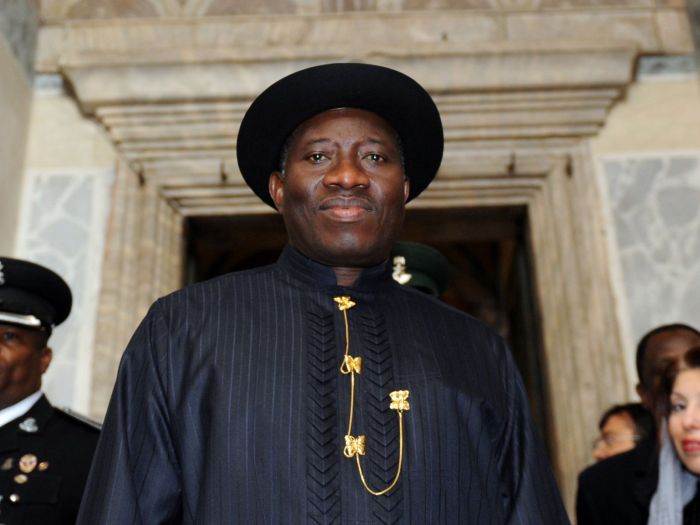
The sudden emergence of former President Goodluck Ebele Jonathan in the presidential contest under a factional wing of the People’s Democratic Party has created more political confusion than excitement, especially among long-time participants and observers of Nigeria’s opposition politics.
For many deeply involved in this political struggle over the months, the issue is not necessarily Jonathan’s ambition to contest. Every Nigerian possesses the constitutional right to seek office. What appears strange, however, is the timing, the prolonged silence before his declaration, and more importantly, the political platform he eventually chose.
After spending months away from the frontline while coalition negotiations, alignments, and realignments consumed the opposition space, many expected that if Jonathan eventually joined the race, he would do so through a clearer and more stable political structure. Instead, he surfaced under a disputed PDP leadership bloc reportedly associated with former Minister Kabiru Turaki — a faction whose legitimacy itself remains uncertain in the eyes of many political stakeholders.
That singular decision has naturally raised serious questions. Why would a seasoned former President, after taking so long to study the political terrain, enter through a structure whose standing remains under legal and political contention, especially at a time the opposition already suffers fragmentation and distrust?
Even more intriguing is the growing relevance of the National Democratic Coalition (NDC), which many political observers believe has strategic connections with former Gov. Dickson Seriake and several influential opposition figures. The movement of heavyweight politicians such as Rabiu Musa Kwankwaso and Peter Obi toward alternative structures further strengthened public suspicion that hidden political understandings had long existed beneath the surface.
Ironically, many emerging political parties now resemble recycled arrangements rather than ideological alternatives. A close observation of party leadership structures visible around the electoral environment reveals overlapping alliances, familiar political actors, and recycled networks merely changing platforms without changing political culture.
But perhaps the greatest danger to Nigeria’s democratic growth today is not only the fragmentation of political parties — it is the increasingly troubling trajectory of the judiciary itself within partisan political disputes.
Instead of stabilizing democracy through clarity, consistency, and timely justice, the political judicial environment has gradually become overwhelmed by endless litigations, conflicting orders, contradictory interpretations, and prolonged jurisdictional battles. Courtrooms now appear almost as permanent extensions of political party secretariats.
At various levels of the judicial hierarchy, different courts often issue conflicting pronouncements over the same political matters, leaving citizens confused and political parties further divided. In many cases, judgments themselves appear more fragmented than the politicians seeking redress.
Rather than resolving internal party crises swiftly, litigation has become an instrument for prolonging instability, weakening opposition cohesion, and creating legal uncertainty around party leaderships, candidate legitimacy, and coalition arrangements.
This trend is dangerous for democracy.
A democracy cannot mature where political disputes never truly end, where parties spend more time in courts than among voters, and where judicial outcomes constantly deepen suspicion instead of strengthening public confidence in institutions.
The situation now dangerously mirrors the 2023 presidential election scenario, where the opposition — particularly the PDP political family — fragmented into multiple competing camps. Atiku Abubakar retained part of the PDP base, while Kwankwaso and Obi extracted substantial voting blocs into separate movements. Simultaneously, Nyesom Wike and several dissatisfied PDP governors weakened the party further from within.
The result was predictable: division, confusion, wasted momentum, and eventual defeat.
Sadly, the present political atmosphere appears to be repeating the same cycle almost step for step. Months were spent negotiating coalition arrangements, building expectations around alliances, and projecting unity through platforms like ADC and other emerging structures. Yet many of those efforts increasingly appear weakened by ego battles, distrust, hidden negotiations, factional interests, and judicial entanglements.
What Nigerians may now be witnessing is not the birth of a formidable opposition movement, but the recycling of old political mistakes under new party names, complicated further by a judicial environment unable to provide stable democratic direction.
And history has repeatedly shown that divided opposition parties, fragmented leaderships, and endless courtroom politics rarely defeat an organized ruling structure in Nigeria.
Call to donate, sponsor posts or for advert placements on our website.
Tel: +234 815 089 8880.
Thank you!