


 News Editor
By David Odama
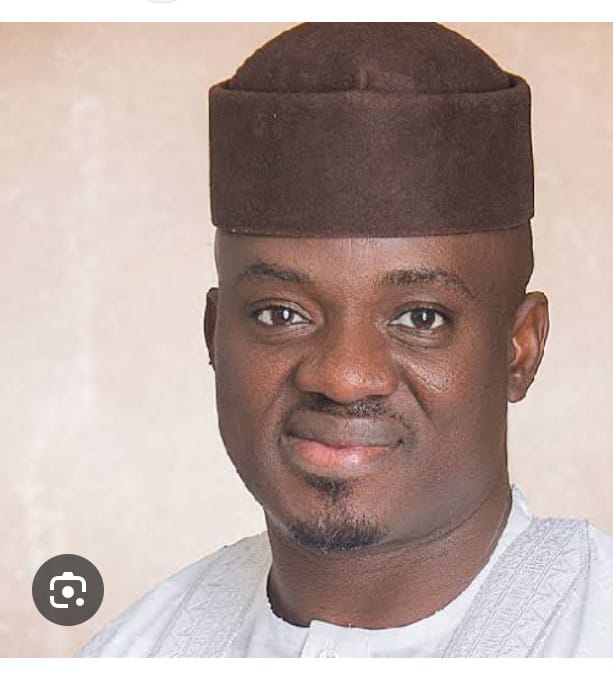
There are moments when leadership transcends the boundaries of office, politics and titles and becomes something much more profound—the capacity to touch human lives, restore hope and create opportunities where none seemed to exist. It is in this context that the story of Rt. Hon. Emmanuel David Ombugadu deserves to be told.
His journey of public engagement has, over the years, been accompanied by interventions directed at education, healthcare, community development, empowerment and economic opportunities, including efforts aimed at building political bridges across divided communities.
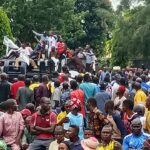
Perhaps, this partly accounted for the unprecedented and monumental crowd that greeted the Peoples Democratic Party (PDP) rally held in Lafia last Saturday to receive the governorship candidate of the party, Rt. Hon. Emmanuel David Ombugadu, and to herald the official flag-off of the party’s governorship campaign in the state.
For the PDP, the turnout, particularly the presence of prominent political figures, was significant for a party that has remained out of power in Nasarawa State for close to 16 years. The size and composition of the gathering offered the opposition party an opportunity to demonstrate that it remains active and politically rooted in the state.
Beyond the flag-off, however, there was another dimension to the gathering: the attempt to reconnect the PDP and its candidate with the expectations and aspirations of ordinary Nasarawa citizens.
For Ombugadu, the occasion was not simply about receiving the party’s mandate as its flag bearer. It was also an opportunity to lay his vision before the Nasarawa electorate.
His manifesto centred on issues that directly affect everyday life—security, agriculture, healthcare, education, human capital development, skills acquisition, economic empowerment, investment and industrialisation.
Some observers described the rally as a significant moment in the emerging 2027 political contest because it moved the PDP campaign from the stage of internal mobilisation and political consultations into a more visible statewide campaign phase.
But beyond the political gathering and the campaign rhetoric lies another chapter in a longstanding philosophy of reaching out to ordinary people with tangible assistance—a philosophy built around a simple but powerful idea: that leadership must ultimately be measured by the lives it touches.
Political office can easily become an end in itself. But the greater purpose of public service is to remember the people whose sacrifices, trust and daily struggles make society what it is. Emmanuel David Ombugadu’s history of intervention reflects an understanding of this responsibility.
From his earlier years of public representation, there have been accounts of assistance to communities, educational support, empowerment initiatives and interventions directed at practical needs. His support for students, for example, has provided opportunities for young people who might otherwise have struggled to remain in school.
His interventions in healthcare have similarly demonstrated an appreciation of the fact that poverty is not merely an economic condition. For a poor family, illness can destroy years of savings and push an already vulnerable household deeper into hardship.
The establishment and activities of the Ombugadu Foundation have added another dimension to this commitment, demonstrating how compassion can be translated into structured humanitarian intervention.
These actions tell an important story: the less privileged do not only need speeches. They need opportunities, healthcare, education, tools, capital and people who are willing to stand with them when circumstances become difficult.
Perhaps the most significant development in this journey is the growing emphasis on economic empowerment. There is an important difference between giving someone temporary relief and giving that person the means to become economically independent.
This is why the current intervention carries a special significance. For the entrepreneur receiving support, the grant is not simply money. It can mean stock for a small shop, equipment for an artisan, working capital for a trader, the opportunity to employ another young person, or simply the chance to keep a dream alive.
In a society where many ordinary citizens struggle to access affordable capital, interventions that place resources directly in the hands of productive citizens can create a powerful ripple effect.
There is another dimension that must not be overlooked. Acts of generosity communicate something that money alone cannot communicate.
They tell the struggling citizen: “You are not forgotten.”
They tell the young entrepreneur: “Your dream is worth supporting.”
They tell the student: “Your circumstances today do not have to determine your tomorrow.”
They tell the artisan: “Your skill has value.”
And they tell the poor family: “There is still a pathway forward.”
This is the essence of hope. Hope is not the denial of hardship. It is the conviction that hardship does not have to be permanent.
When somebody who has acquired influence and resources deliberately uses part of those resources to create opportunities for people at the bottom of the economic ladder, that act can become a source of renewed confidence in society itself.
The story of Rt. Hon. Emmanuel Ombugadu should therefore not be interpreted merely as a competition over who gives the most. The greater lesson is that everyone with the capacity to make a difference should do so.
Sometimes, the more important question is: “Whose life can I change with what I already have?”
That, by popular demand, is what Ombugadu has sought to demonstrate over the years.
One of the most beautiful features of genuine philanthropy associated with Rt. Hon. Emmanuel Ombugadu is its potential to multiply—particularly through support for education, entrepreneurs, artisans, healthcare initiatives and mentorship.
There is an important lesson here for public leadership. Positions are temporary. Titles change. Political seasons come and go. But the memory of kindness can remain with a person for a lifetime.
This is the deeper meaning of service. It is not merely occupying an office. It is leaving behind evidence that one’s presence mattered.
At a time when many ordinary citizens are confronted by rising costs, unemployment, limited access to capital and economic uncertainty, initiatives that restore dignity and create opportunity deserve attention.
The year 2027 presents another defining moment for Nasarawa, particularly if the aspirations and realities of its people are to be meaningfully addressed.
Let politicians understand that beyond elections, there are human beings whose hopes and aspirations remain long after campaigns have ended.
Call to donate, sponsor posts or for advert placements on our website.
Tel: +234 815 089 8880.
Thank you!