



 News Editor
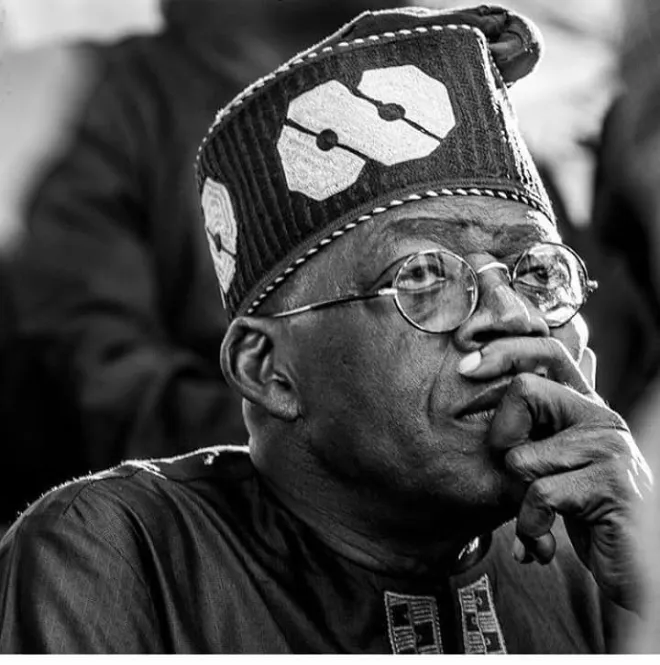
The All Progressives Congress (APC) appears to be sliding into a fresh internal crisis at the National level following the resignation of the Chief of Staff to its National Chairman, Mustapha Bala Dawaki, who has now defected to the Nigerian Democratic Congress (NDC).
The development is being interpreted within political circles as a major indictment of the leadership style of APC National Chairman, Professor Nentawe Yilwada, and yet another sign that the ruling party may be heading into the 2027 general elections more fractured than united.
Dawaki, a respected grassroots politician and former member of the House of Representatives from Kano State, was appointed Chief of Staff to Professor Yilwada largely at the insistence of influential APC governors and senior stakeholders who reportedly believed the Chairman lacked the political depth, administrative coordination, and broad national network necessary to effectively manage a party as large and complex as the APC.
At the time of his appointment, many party insiders viewed Dawaki as a stabilising force — someone expected to compensate for what they considered glaring deficiencies in the National Chairman’s political management capacity. Ironically, it is now that same insider who has walked away from the party in frustration.
Sources close to Dawaki disclosed that his resignation was driven by mounting dissatisfaction over the internal direction of the APC under Yilwada’s leadership. The concerns reportedly range from allegations of financial impropriety and opaque decision-making to complaints of arrogance, poor consultation, exclusionary politics, and the systematic marginalisation of critical stakeholders within the party hierarchy.
One source, Shehu Wudil, alleged that Dawaki and several members of the National Working Committee (NWC) became increasingly uncomfortable with what they described as the Chairman’s unilateral style of leadership. According to him, key officials were routinely excluded from strategic meetings, candidate selection processes, and deliberations surrounding the conduct of the recently concluded APC primaries.
But perhaps more damaging are the allegations now emerging around the conduct of those primaries themselves.
Another source, who spoke on condition of anonymity, alleged that Dawaki’s resignation may be directly connected to the growing scandal surrounding the APC Chairman’s handling of governorship ticket negotiations across several states.
According to the source, Professor Yilwada allegedly collected huge sums of money from multiple governorship aspirants in exchange for assurances that they would secure APC tickets during the recently concluded primaries — promises he ultimately failed to deliver on.
Among those reportedly caught in the controversy are Bala Wunti in Bauchi State, former Inspector General of Police Mohammed Adamu in Nasarawa State, and Abdulfatai Seriki in Kwara State, among others.
The source claimed that the resulting anger and embarrassment among aspirants and their supporters have created deep resentment within the party and severely weakened confidence in the National Chairman’s credibility.
“This is no longer ordinary dissatisfaction,” the source stated. “People feel deceived, used and discarded after enormous financial commitments were allegedly made on the basis of assurances from the highest levels of the party leadership.”
The allegations do not stop there.
In Benue State, party insiders alleged that the National Chairman also received enormous financial inducements — including what was described as a luxury duplex in Maitama, Abuja — from forces aligned with the Benue State Governor in exchange for ensuring that candidates associated with the Secretary to the Government of the Federation, Senator George Akume, were denied emergence during the APC primaries in the state.
If true, the implications are politically explosive.
Observers say such allegations strike at the very moral foundation upon which party discipline, internal democracy, and trust are built. More dangerously, they reinforce the growing perception among party loyalists that the APC national leadership has become transactional, factionalised, and dangerously disconnected from its grassroots base.
A second source, Dahiru Gombawa, further alleged that tensions within the party escalated after the Chairman reportedly began surrounding himself overwhelmingly with loyalists and associates from Plateau State, thereby alienating powerful blocs from other geopolitical zones — particularly the North-West, traditionally regarded as one of the APC’s strongest electoral strongholds.
According to Gombawa, many party members now believe that rather than functioning as a truly national chairman, Professor Yilwada has reduced the office to an extension of local Plateau political calculations.
“He was handed a national platform,” Gombawa said, “but instead of building bridges across the federation, he narrowed his focus to local politics and tribal loyalties. That is why he has struggled to build trust, alliances, and national influence.”
The source warned that Dawaki’s defection could trigger a broader political realignment in the North-West, where frustration with the APC leadership is reportedly intensifying.
“This should worry the Presidency seriously,” he added. “The North-West already feels sidelined under the Tinubu administration. If the APC continues on this path, and if the National Chairmanship is not reconsidered strategically, the party risks losing one of its most critical support bases ahead of 2027.”
Significantly, neither Mustapha Bala Dawaki nor Professor Nentawe Yilwada has issued an official statement regarding the resignation and defection as of the time of filing this report. The APC national secretariat has also remained silent over the corruption allegations and broader accusations surrounding the Chairman’s leadership style.
Behind closed doors, however, senior party figures are said to be deeply alarmed by the growing cracks within the APC.
Many now fear that the party is gradually drifting into a crisis of confidence fueled not by opposition attacks, but by internal mistrust, weak leadership, poor political management, and an apparent inability to reconcile competing interests within the ruling coalition.
For a party preparing for a fiercely contested 2027 election cycle, these are dangerous signals.
At the heart of the crisis lies a difficult but unavoidable question: does Professor Nentawe Yilwada truly possess the political capacity, strategic depth, national reach, and reconciliation skills required to lead a party as vast and combustible as the APC into another general election victory?
Critics argue that events so far suggest otherwise.
Rather than projecting the image of a unifying national leader capable of balancing interests across regions, tendencies, and power blocs, the APC Chairman is increasingly being portrayed as politically narrow, administratively weak, and incapable of managing the conflicts of the ruling party.
Indeed, many observers believe his greatest failing may be the smallness of his political vision. Despite occupying one of the most powerful party offices in Nigeria, he appears to have devoted disproportionate energy to local political battles tied to Plateau State while neglecting the broader national coalition-building required to sustain the APC as a governing platform. *_Professor Yilwada’s interest in national politics seems to appear only when he can leverage the enormous influence of his office to secure personal advantages and political favours for himself._*
Little wonder, critics say, that he has struggled to inspire confidence, forge broad-based alliances, or assert meaningful national influence within the party structure.
As defections grow, grievances deepen, and accusations mount, many within the APC are now openly asking whether Professor Yilwada is truly the right man to deliver victory for President Bola Ahmed Tinubu in 2027 — or whether his continued leadership may instead become a liability the party can no longer afford.
Hamisu Naibawa
APC Kano State
Call to donate, sponsor posts or for advert placements on our website.
Tel: +234 815 089 8880.
Thank you!