


 News Editor
By Ibrahim Nasiru
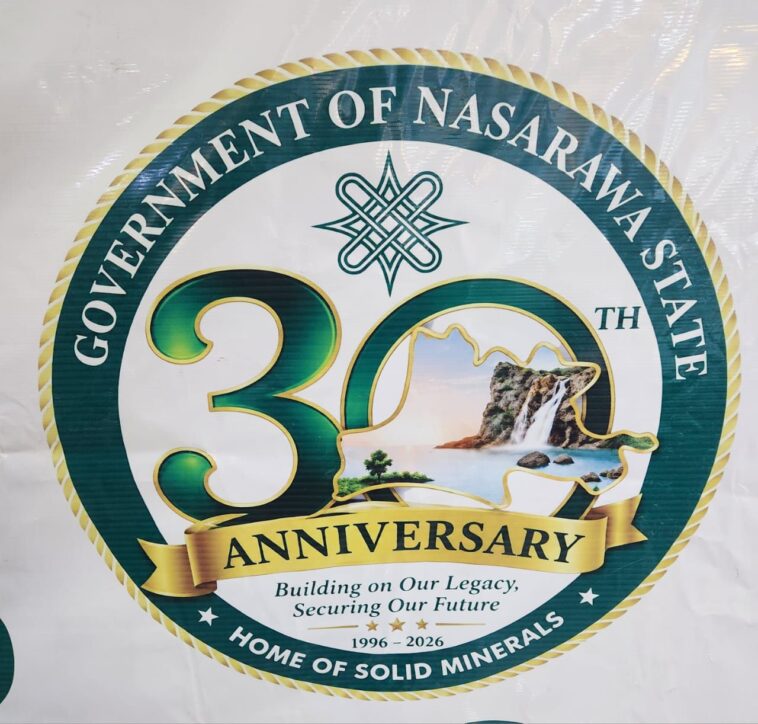
As Nasarawa State prepares to mark its 30th anniversary on October 1st, 2026, the state capital of Lafia is predictably awash with expensive government-sponsored commentary. Official publicists, commissioners, and hired commentators are eagerly spinning a polished narrative claiming that the dreams of the state’s founding fathers have not only been met, but exceeded. They point aggressively to the N39 billion twin flyover project in Mararaba and shiny new secretariat complexes as definitive proof of transformation.
However, a clinical look beneath this expensive public relations veneer reveals a deeply troubling reality. For the ordinary citizens living along the crucial Abuja corridor and within the neglected agrarian hinterlands, Nasarawa at thirty is not a mature state ready for celebration; it remains a structural toddler struggling to crawl, operating as a glorified, underfunded dormitory for the Federal Capital Territory.
The most damning indictment of Nasarawa’s thirty-year journey is the structural reduction of its most populated urban centers into mere sleeping quarters for Abuja’s workforce.
The much-celebrated 2.6-kilometre Mararaba-Karu flyover corridor is less an engine of internal economic growth and more a physical monument to this dependency.
Despite three decades of executive governance, the state has systematically failed to build an independent, self-sustaining economic ecosystem along its border local governments. Instead of thriving industrial hubs and commercial zones, the FCT border axis remains a chaotic, congested sprawl where millions of residents pay taxes and consume resources locally, while their productive economic energy is entirely drained by Abuja.
A state cannot claim to have fulfilled the dreams of its founding fathers when its survival depends almost entirely on its proximity to the federal capital’s economic table.
Nowhere is the failure of this thirty-year trajectory more visible than in the total collapse of its critical social infrastructure, particularly healthcare and education.
The recent relocation of the Dalhatu Araf Specialist Hospital (DASH) in Lafia to serve as the Federal University of Lafia Teaching Hospital (FULTH) is a classic example of renaming an old bottle without changing the sour wine inside.
Beyond the new federal nomenclature, the actual facilities on the ground are in an advanced state of decay. The primary tertiary health center is catastrophically overstretched, plagued by inadequate equipment, and rendered practically inaccessible to the poor due to the prohibitive, skyrocketing cost of basic healthcare services.
Similarly, the educational sector and public schools across the state remain severely underfunded, understaffed, and incapable of producing the high-value human capital needed to drive a modern 21st-century economy.
Furthermore, the official rhetoric surrounding industrialization and wealth creation completely falls apart when matched against the state’s massive, wasted natural advantages.
Nasarawa sits on vast expanses of highly arable land and rich solid mineral deposits, yet these critical sectors have been left to rot under poor regulatory oversight and lack of structural support. The state’s smallholder agrarian population remains trapped in subsistence farming, cut off from modern processing facilities, while thousands of hectares of fertile land lie completely wasted.
The mineral sector remains a playground for unregulated, artisanal exploitation that yields nothing tangible for the state’s internally generated revenue. When the drums of October 1st begin to beat, the ordinary citizens navigating historic food inflation, broken hospitals, and systemic poverty must ask the ruling elite a fundamental question: what exactly are we celebrating?
Until governance shifts from building cosmetic concrete flyovers to investing heavily in human dignity and structural independence, Nasarawa remains an unfulfilled dream
Ibrahim Nasiru
Is A Public Affairs Analyst and Political Commentator
Call to donate, sponsor posts or for advert placements on our website.
Tel: +234 815 089 8880.
Thank you!