



 News Editor
Money tells a story. Not just about how much you have, but about what you believe.
Two groups of people look at the same amount of money and make two completely different decisions.
One group spends to be seen.
The other group spends to grow.
One is chasing applause.
The other is chasing harvest.
This is the difference between *wisdom and folly in spending.*
*1. The Trap: Spending to Impress*
Many poor people don’t stay poor because they earn too little. They stay poor because of _where_ the little they earn goes.
The pattern is familiar:
New phone every year, even when the old one works.
Expensive clothes for an event that lasts 3 hours.
Borrowing to host a party so neighbours will clap.
Keeping up with people that don’t even know your name.
Why? Because society teaches us: _“Your value is what people see.”_
So we spend money we don’t have to buy things we don’t need to impress people that don’t care about us.
Proverbs 21:20 — _“Precious treasure and oil are in a wise person’s dwelling, but a foolish man devours it.”_
The result?
The money comes in on Friday and leaves by Monday.
No investment. No seed. No harvest next season.
Only debt, pressure, more debt and the same cycle repeating again and again.
The people you’re trying to impress are not paying your rent.
They are not in your house when the lights go off.
They will not help you pay hospital bills as well as when the money finishes.
But you spent your future trying to get their nod, do you get it eventually?
That is not spending. It is bleeding.
*2. The Pattern: Rich People Stay Simple and Spend Wisely*
Now watch the other side.
Many rich people drive simple cars. Live in simple houses. Wear simple clothes.
Not because they can’t afford more. But because they understand a principle: _Money is a seed, not a trophy._
Their questions before spending are different:
1. *Will this produce more money?* — If yes, invest.
2. *Will this protect money?* — If yes, save.
3. *Will this cost me money later?* — If yes, avoid.
They spend on assets: land, business, education, tools, relationships, health and others.
They avoid frivolities and mundane things that depreciate the moment you buy them.
Warren Buffett still lives in the house he bought in 1958.
Steve Jobs wore the same black turtleneck every time before he died.
They were not trying to prove anything to anyone, instead, their focus is on legacy and and progress.
Proverbs 22:7 — _“The rich rules over the poor, and the borrower is the servant of the lender.”_
Rich people refuse to become servants to debt for the sake of image.
They delay gratification now so they can have freedom later.
Their spending has a goal: *Harvest and more harvest.*
Every naira spent is either planting or protecting.
*3. Wisdom: The Difference Is Vision*
The core difference is not income. It is _vision._
*Foolish spending asks:* “How will this make me look today?”
*Wise spending asks:* “How will this make me live 5 years from now?”
Foolish spending feeds pride.
Wise spending feeds the future.
Foolish spending says: “Let me show them.”
Wise spending says: “Let me build it.”
Luke 14:28 — _“For which of you, desiring to build a tower, does not first sit down and count the cost?”_
Wisdom counts the cost. Folly counts the likes.
*4. 4 Practical Choices That Separate the Two*
1. *Buy Assets Before Liabilities*
Poor: Buy iPhone on loan.
Rich: Buy land, then buy iPhone with profit from land.
_Assets put money in your pocket. Liabilities take money out._
2. *Invest in Skills Before Status*
Poor: Spend on designer to look like a CEO.
Rich: Spend on courses to become a CEO.
_Skill pays forever. Status fades in one season._
3. *Practice Delayed Gratification*
Poor: “I deserve it now.”
Rich: “I will deserve it more later.”
_The ability to wait is the ability to win._
4. *Give and Save First, Spend Last*
Proverbs 3:9 — _“Honour the Lord with your wealth and with the firstfruits of all your produce.”_
Wise people budget for God, for savings, for investment. Then they spend what’s left.
Foolish people spend first. Then wonder what’s left.
*5. The Final Word: Harvest or Applause*
At the end of the year, applause does not pay school fees.
At the end of 10 years, likes do not build a house.
At the end of life, frivolities cannot be remembered.
But harvest can.
Harvest from seeds you planted when no one was watching.
Harvest from investments you made when it was not convenient.
Harvest from wisdom that chose quiet growth over loud spending.
Ecclesiastes 11:6 — _“In the morning sow your seed, and at evening do not withhold your hand, for you do not know which will prosper.”_
*So choose wisdom.*
Spend less to impress people who don’t care.
Spend more to invest in things that will care for you later.
Let your money work for you, not for your image.
Let your life be rich in harvest, not just rich in noise.
Because the goal is not to look wealthy.
The goal is to _be_ wealthy — in peace, in provision, and in purpose.
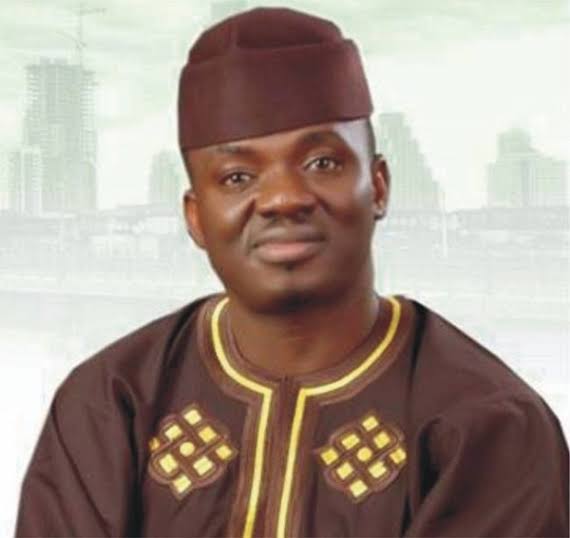
*I am Dr Frank Peter Ombugadu still on at least 3 People Every Day*
Call to donate, sponsor posts or for advert placements on our website.
Tel: +234 815 089 8880.
Thank you!