



 News Editor
By Ibrahim Nasiru
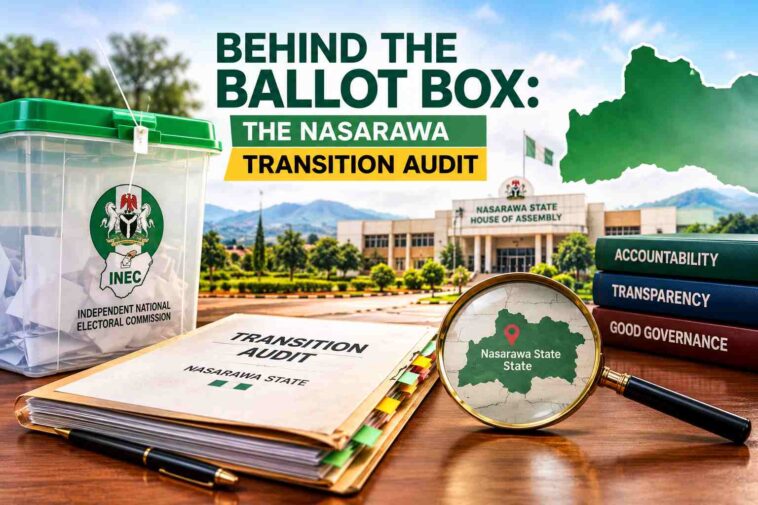
The standard political playbook is already in full motion across Nasarawa State. Local government councils are populating, slogans are flying, and the incumbent machine is quietly fortifying its networks. But for the alternative forces—most notably the African Democratic Congress (ADC) and the Social Democratic Party (SDP)—the current path looks like a guaranteed breakdown in electoral mathematics.
In this structural audit, we strip away the performative optimism to reveal the true chokepoints of Nasarawa’s sub-national political economy. Winning in 2027 will not be achieved through media visibility or cheap political attacks; it requires a clinical, unvarnished understanding of the structural realities on the ground.
THE ELECTRICITY ILLUSION: PAPERWORK VS. POWER
The national conversation is currently dominated by the “2027 Megawatt Mandate,” with commentators debating whether Abuja or state governors bear responsibility for Nigeria’s electricity crisis. The Electricity Act 2023 theoretically decentralized the sector, allowing states to establish independent electricity markets and break free from central failures.
Nasarawa State officially completed its regulatory transition on February 3, 2026. However, a state electricity market is not an achievement merely because the paperwork is signed. Megawatts announced are not megawatts delivered.
While Abuja retains its monopoly over the high-voltage transmission backbone and gas pricing, Nasarawa’s leadership has failed to leverage its new powers to build autonomous, off-grid, embedded solar, mini-hydro, or captive gas solutions for its industrial and agricultural hubs.
To ask how a state will secure fuel or financing for independent power is to question the very definition of sub-national leadership. It is the governor’s job to eliminate multiple taxation, create fiscal incentives, and provide the security necessary to make local power investments bankable.
Until the paperwork translates to actual power, the regulatory transition remains a performative milestone rather than a structural victory.
THE SOLID MINERALS DRAIN:
Nasarawa is famously heralded as the “Home of Solid Minerals,” yet its fiscal reality tells a starkly different story. The state sits on massive, highly valuable deposits of lithium, marble, coal, and barite, which ought to guarantee robust internally generated revenue (IGR) and widespread local prosperity.
Instead, systemic leakages, informal mining networks, and unfavourable federal arrangements mean that the wealth of Nasarawa’s subsoil does not reflect in its public balance sheet.
The local population bears the brunt of environmental degradation and displacement caused by mining activities, while the real financial returns are quietly exported out of the state.
Any serious alternative political platform must move beyond merely lamenting this extraction; they must present a costed, legally sound blueprint to plug these leakages, formalize artisanal mining clusters, and aggressively enforce sub-national derivation rights.
STAGNANT LOCAL GOVERNMENTS
The sub-national economy cannot function when its lowest tiers are economically paralyzed. Local government councils in Nasarawa have historically operated as administrative appendages of the state executive rather than autonomous drivers of development. This systemic stagnation directly undermines local commerce, rural infrastructure, and agricultural value chains.
When local governments are reduced to mere salary-paying entities with zero development capacity, the rural economy collapses. This failure drives mass migration toward urban centers and compounds the security challenges facing the state. A true structural transition requires restoring the full fiscal and administrative autonomy of these councils to unlock grass-roots productivity and rural market stability.
THE VOLATILE FCT BORDER DEMOGRAPHICS:
The ultimate decider of Nasarawa’s electoral mathematics lies along its volatile border with the Federal Capital Territory (FCT). Districts like Karu, Mararaba, and Nyanya hold dense, highly conscious, and economically diverse populations that operate largely within the economic orbit of Abuja but vote in Nasarawa.
These border demographics do not respond to traditional rural patronage networks, ethnic appeals, or local incumbency machinery. They are driven by anxieties over housing, transport, basic infrastructure, and security.
For alternative parties like the ADC and the SDP, these border zones represent the ultimate electoral frontline. However, capturing this vote requires an explicit, sophisticated urban-suburban mobilization strategy that treats these communities as critical economic gateways rather than electoral afterthoughts.
THE MATHEMATICS OF THE STATUS QUO:
The math of Nasarawa politics is unforgiving. The incumbent political machine relies on fragmented opposition forces to maintain its grip on power. As it stands, if the ADC and the SDP spend the coming months fighting each other for media visibility and local dominance, they will simply perform the role of strategic facilitators for the status quo.
This isn’t about cheap political attacks; it is a clinical blueprint for what it actually takes to win. To defeat an entrenched incumbent machine, alternative forces must aggregate their strength, align their policy frameworks on energy, mining, and local administration, and confront the structural realities of the state.
The era of performative politics is over. The data speaks tomorrow.
— Ibrahim Nasiru
Public Affairs Analyst
Editor’s Note: This is Part 1 of an ongoing series dissecting the sub-national political economy of Nasarawa State. Look out for Part 2 next Wednesday: “BEHIND THE BALLOT BOX: A Structural Audit of the Wadada-Ombugadu Ticket,” where we deconstruct the fiscal capacity and public accounts framework of the incoming APC flagbearers.
Call to donate, sponsor posts or for advert placements on our website.
Tel: +234 815 089 8880.
Thank you!