



 News Editor
By Ibrahim Nasiru
Across Northern Nigeria and parts of Abuja in recent weeks, one Hausa word has taken over our 2027 political conversation: “Bamayi”—which simply means “we are not doing” or “we reject it,” much like “our mumu don do” in Pidgin, “O ti to ge” in Yoruba, or “O zuola” in Igbo (“enough is enough”).
From street corners in Kaduna during campaign flag-offs to outside the Shehu Shagari Central Mosque in Abuja on Friday, November 13, viral videos of angry youths chanting the word have worried political strategists ahead of next year’s elections.
On Tuesday, November 17, the All Progressives Congress (APC) Presidential Campaign Council in a statement signed by council spokesperson Dele Alake, accused the opposition African Democratic Congress (ADC) and Nigeria Democratic Congress (NDC) of paying thugs to chant “Bamaiyi” and disrupt campaign events.
Every true democrat must condemn political violence, stone-throwing, and the destruction of campaign billboards without hesitation. No election campaign should ever turn into a battleground where lives or property are put at risk. However, blaming opposition parties for every sign of public anger misses the real warning signal in the country. Even worse, it exposes a clear double standard when state-owned public venues suddenly become unavailable the moment opposition parties ask to hold peaceful rallies.
1. Street Chants Are a Warning Sign, Not Just a Plot
In Nigerian politics, ruling parties always find it easy to blame opposition plots whenever crowds turn unfriendly. Yet slogans like “Bamayi” do not spread across several cities just because someone paid a few youths. They catch fire because millions of ordinary citizens are struggling with high food prices, rising transport costs, and lingering insecurity across farms and highways.
You cannot arrest a slogan, and you cannot silence public anger with press statements. Nigeria’s political history since 1999 shows that when citizens see real improvements in their daily lives and feel that leaders are listening, street chants fade away on their own. When hardship bites hard, even a quiet whisper turns into a loud chorus.
2. The Old Excuse of “Ongoing Repairs” at Public Stadiums
Even more worrying than street chants is the familiar habit of shutting opposition parties out of public venues across state capitals. Just as the ruling party condemns disruption rightly stating in its own release that democratic space must be protected, opposition parties keep running into roadblocks whenever they apply to use public stadiums and squares.
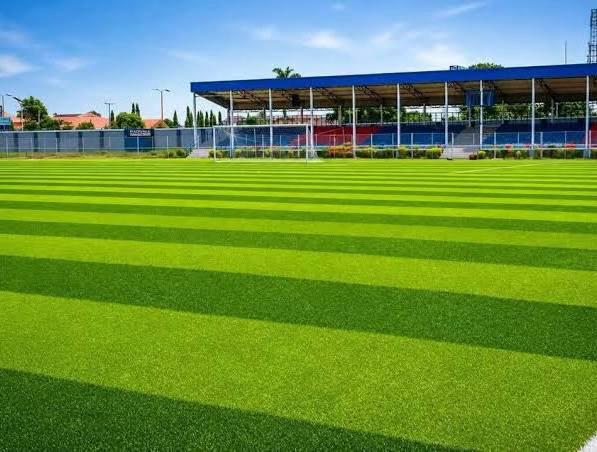
Look at the ongoing row in Kaduna over Ranchers Bees Stadium. Barely weeks after the ruling party used the exact same stadium on October 24 to flag off its presidential campaign, the Kaduna State Ministry for Local Government Affairs declined the ADC’s request to use the facility for its November 17–18 rally, citing “ongoing repairs”—prompting the opposition to announce plans to take its rallies to Kaduna’s streets.
Whether in Kaduna or any other state, Nigerians have seen this script too many times. Public stadiums built and maintained with taxpayers’ money stay wide open for ruling party rallies and suddenly enter “emergency repairs” the week an opposition group asks to use them.
3. Locking Stadium Gates Pushes Politics Into the Streets
Denying opposition parties orderly, fenced venues creates a dangerous problem: it forces political crowds onto open highways and busy streets. Inside a stadium, security agencies can check attendees, control entry gates, and keep rallies peaceful from start to finish. When parties are locked out of public arenas, thousands of supporters spill onto city roads, disrupting traffic and creating the exact tension and disorder that security agencies claim they want to avoid.
The Bottom Line
If the ruling party truly believes it will win the 2027 election on performance and superior organization, it should welcome open, peaceful competition in every public square from Kaduna to Lagos, Port Harcourt, and Maiduguri . Condemn thuggery, prosecute anyone who attacks convoys, and protect every candidate, including the President—but open the stadium gates for all registered parties.
Democracy grows stronger when ideas compete inside open arenas, not when opposition voices are locked outside the fence.
Ibrahim Nasiru
Public Affairs Analyst
Call to donate, sponsor posts or for advert placements on our website.
Tel: +234 815 089 8880.
Thank you!