



 News Editor
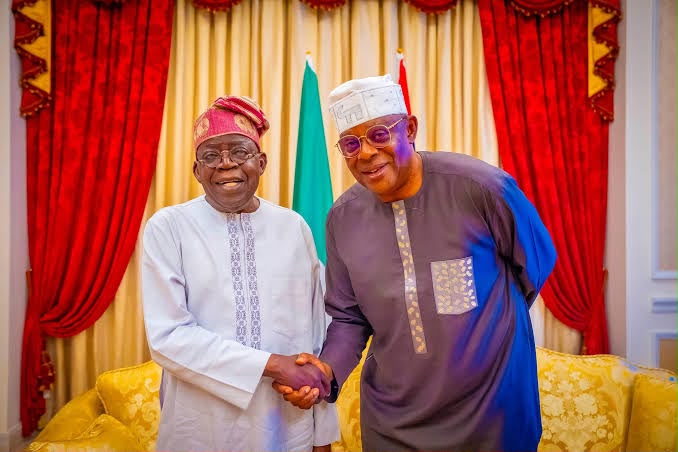
By Arowolo Solomon Alaba
In politics, there are those who seek power for personal advancement, and there are those whose greatest influence lies in the number of lives they transform. While public attention often gravitates toward governors, ministers, and presidents, history repeatedly reminds us that behind every successful political movement are individuals whose vision, organization, and unwavering commitment make victory possible. Hon. James Abiodun Faleke belongs to that rare category of political leaders whose greatest legacy may not be the offices he has occupied, but the people he has built.
Across Nigeria’s political landscape, Faleke has earned a reputation as a bridge-builder, a strategist, and above all, a man who believes that leadership is measured not merely by personal success but by the opportunities created for others. His journey demonstrates that true political influence is not exercised through noise or self-promotion, but through consistent service, disciplined organization, and an enduring commitment to developing people.
Long before the 2023 presidential election gathered momentum, Hon. James Faleke had already begun laying the foundation for what would become one of the most formidable grassroots political movements in Nigeria’s democratic history. At a time when many political actors were waiting for official declarations and campaign structures, Faleke was already thinking beyond the moment. He understood that successful political movements are not built during election season; they are built through preparation, organization, and belief.
That conviction gave birth to the Tinubu Support Group (TSG), a movement that would eventually grow into a nationwide network spanning every geopolitical zone of the country. What distinguished the TSG was not merely its size but its structure. Volunteers, professionals, students, market women, artisans, youth groups, religious leaders, and community organizers found a common platform through which they could contribute to a shared national vision.
Perhaps one of Faleke’s greatest strengths is his remarkable ability to identify talent. Leadership, after all, is not simply about giving instructions; it is about recognizing potential in people long before others see it. Throughout his political journey, Faleke has consistently entrusted responsibilities to young professionals, media practitioners, administrators, and grassroots mobilizers, giving them opportunities to grow through service.
Many of those who joined the Tinubu Support Group did so without political titles, financial resources, or established influence. They arrived as volunteers driven only by conviction. Under Faleke’s leadership, they became organizers, communicators, coordinators, and strategists. They were trusted with responsibilities that transformed not only the movement but also their own careers. In doing so, Faleke demonstrated an important principle of leadership: people develop when leaders believe in them before they believe in themselves.
This philosophy of human capital development has become one of the defining features of his political career. Across different stages of Nigeria’s democratic journey, numerous individuals have emerged from his political network to assume greater responsibilities in public service. Rather than surrounding himself with familiar faces alone, Faleke has consistently expanded his circle by identifying competence, nurturing loyalty, and creating opportunities for others to excel.
His politics therefore extends beyond elections. It is fundamentally about institution-building and succession planning. While many politicians focus exclusively on winning the next contest, Faleke has invested considerable energy in building structures capable of outliving any single political cycle. The Tinubu Support Group itself stands as evidence of that philosophy. What began as a modest gathering of committed believers evolved into a disciplined national organization that played a significant role in mobilizing support across Nigeria.
Another defining characteristic of Faleke’s leadership is loyalty. In contemporary politics, where shifting alliances have become increasingly common, loyalty is often treated as a temporary convenience rather than a lasting principle. Faleke has consistently demonstrated that political loyalty, when rooted in shared ideals rather than personal gain, can become a source of stability and trust.
His longstanding relationship with President Bola Ahmed Tinubu reflects this principle. Through years of political collaboration, Faleke remained steadfast in his belief in Tinubu’s leadership philosophy, even during periods when such loyalty attracted criticism or uncertainty. When the opportunity came to build support for Tinubu’s presidential aspiration, Faleke did not wait for certainty. He acted on conviction. That willingness to commit before success was guaranteed became one of the defining features of the movement he helped establish.
Beyond strategy and organization lies another quality that distinguishes Faleke: accessibility. Those who have worked closely with him often speak of a leader who values ideas over hierarchy and commitment over status. Within the TSG, volunteers found themselves working alongside experienced politicians, professionals, and administrators in an atmosphere where contribution mattered more than title. Such an approach fostered ownership, strengthened morale, and encouraged initiative among thousands of supporters across the country.
The significance of this leadership style extends beyond partisan politics. Nigeria’s democratic future depends not only on charismatic leaders but also on individuals capable of building institutions, mentoring younger generations, and strengthening civic participation. In this regard, Faleke’s contribution offers an important lesson. Sustainable political success is rarely achieved through individual brilliance alone. It emerges from collective effort, disciplined organization, and deliberate investment in people.
As the Tinubu administration continues to shape Nigeria’s future, the story of James Faleke serves as a reminder that some of the most consequential leaders are not always those who occupy the highest offices. Sometimes, they are the architects working behind the scenes—building structures, nurturing talent, inspiring loyalty, and creating opportunities that empower others to serve.
History will undoubtedly remember President Bola Ahmed Tinubu as the leader who secured victory at the ballot box. Yet history should also remember those whose vision, sacrifice, and organizational genius helped make that victory possible. Among them, Hon. James Abiodun Faleke stands out as a master strategist, a builder of institutions, and a leader whose greatest achievement may well be the countless lives he has empowered.
In an era where politics is too often reduced to personal ambition, James Faleke reminds us that the highest form of leadership is not simply rising to the top—it is lifting others as you rise. That, perhaps, is the true measure of statesmanship, and it is a legacy that will continue to shape Nigerian politics for years to come.
Arowolo Solomon Alaba is a veteran journalist. He is a PhD student whose research focuses on governance, political communication, and democratic institutions.
Call to donate, sponsor posts or for advert placements on our website.
Tel: +234 815 089 8880.
Thank you!