


 News Editor
A Principled Rejection of an Exclusionary Territorial Project
Submitted for public consideration by the peoples of Benue State, particularly the Idoma and Igede peoples of Benue South.
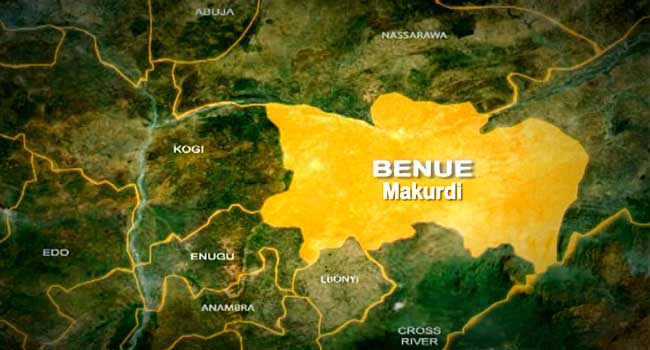
The petition of 14 August 2026 for a “Benue Region” claims to rest on consent, inclusion, shared history and mutual respect. We support those principles, but we reject their application in this proposal. We are not opposed to federal restructuring, fiscal federalism, regional autonomy, or improved security coordination. Our objection is to a proposed “Benue Region” that selectively defines its territory while excluding major indigenous communities of present-day Benue State — especially the Idoma and Igede — without evidence of their consent. The petition speaks for “the People of Benue Region” yet excludes Benue South entirely, and a federation cannot be built on assumed consent. We therefore reject the proposal in its present form.
Our position rests on five points. No mandate has been shown from the Idoma, Igede, or other excluded peoples. The territorial design is selective and inconsistent with the claimed Benue Valley framework. Shared history is invoked selectively, while connected traditions across the Benue Valley and the wider Kwararafa historical sphere are ignored. The powers proposed over security, land, and resources make inclusion a major political and economic issue requiring genuine consent. And no region can be created in the name of “consent” without the explicit consent of every affected people.
It is fair to ask who actually gave this mandate. The petition claims to speak for “the People of Benue Region,” yet it offers no evidence of consultation with Idoma and Igede institutions, the affected Local Government Areas, traditional rulers, elected representatives, or civil society groups. Without demonstrated consent, what has been presented is only a proposal — not a mandate.
The territorial selectivity is difficult to justify. The proposed Region includes fourteen Local Government Areas from Benue State but excludes the whole of Benue South. On what historical, cultural, or democratic basis are the Idoma and Igede excluded from a “Benue Valley” reconstruction? No clear answer is provided, and none has been offered since.
If the Benue Valley is truly the basis of the proposal, it must be applied consistently. One cannot invoke shared valley history while excluding major valley communities without a clear and honest rule for doing so. This is selective territorial design, not historical reconstruction.
The Kwararafa tradition is often cited in support of the proposal, but it cannot bear that weight. Kwararafa traditions reflect complex, interconnected histories among the Middle Benue peoples, including the Idoma, the Jukun, and others, and scholarship shows these relationships to be debated and non-exclusive. Such histories cannot justify political ownership, cannot be used to exclude others, and cannot be used to absorb communities without their consent. Kwararafa is a shared historical space, not a political title deed.
Distinct identities among the Idoma, Igede, Tiv, Jukun, Igala and others are the product of long historical evolution, and shared history does not equal political merger. Interconnected history does not remove the need for consent. Nor does colonial administrative history create modern political entitlement — past administrative arrangements cannot justify present territorial claims without the consent of those concerned.
The security argument advanced for the proposal does not hold either. Cross-border insecurity does not require the creation of a new Region; it can be addressed through joint operations, intelligence sharing, coordinated policing, and regional security frameworks. Security cooperation is not, by itself, a justification for territorial reconstitution.
The resource and power implications are equally serious. The proposal includes major control over land, resources, and revenue, built around an 80:20 model, and this makes inclusion a serious constitutional issue in its own right. No community should be incorporated without consent into a structure of this kind. Indeed, a Region claiming equality externally must first demonstrate legitimacy internally — and the proposal does not demonstrate this.
Cooperation across the Benue Valley is welcome, but cooperation does not require political merger, territorial absorption, or the loss of identity. States and communities can collaborate fully without being merged. The Idoma and Igede peoples, in particular, must not be assumed into this project. Their identities are central to Benue’s history and cannot be treated as optional or secondary; their participation must rest on consent, not assumption. Kwararafa history remains shared and contested, and it cannot be used to justify political control by any one group — it is a bridge of history, not a deed of ownership. And a new Region cannot be pretended to be old: this is a new political construction, not the restoration of an ancient map, and it must be treated as such.
Consent must come first. The proper sequence runs from people, to consultation, to consent, to design, and only then to territory. The proposal reverses this order, and that is unacceptable.
We support alternative paths that achieve the legitimate aims of cooperation without forced political merger: Benue Valley development cooperation, joint security frameworks, economic corridor planning, cultural and historical commissions, and inclusive constitutional dialogue.
For these reasons, we reject the proposed Benue Region. It lacks demonstrated consent. It excludes major communities. It selectively uses history. It overreaches on security and resources. It confuses cooperation with absorption. And it is not based on a transparent methodology.
We are not against restructuring. We are against imposition. We affirm that the Idoma, Igede, and all peoples must decide their own political future, that history must not be selectively used, that cooperation does not require merger, and that consent is non-negotiable.
WE THEREFORE STATE CLEARLY: We reject the proposed Benue Region in its present form. We reject any arrangement that includes or excludes communities without their free and informed consent. We reject the selective use of history to justify a predetermined map. We affirm that the Benue Valley’s future must be built on consent, not imposition.
SIGNED
Air Vice Marshal Monday Riku Morgan (Rtd)
Akii-Kwararafa Empire
For: Benue Rebirth Movement
Date:/15/08 2026
Call to donate, sponsor posts or for advert placements on our website.
Tel: +234 815 089 8880.
Thank you!