


 News Editor
By Ibrahim Nasiru
“In the architecture of governance, the strength of the structure depends entirely on the precision of the foundation.”
As Nasarawa State approaches the 2027 transition cycle, the discourse surrounding Governor Abdullahi Sule’s successor is increasingly centering on the theme of technocratic continuity.
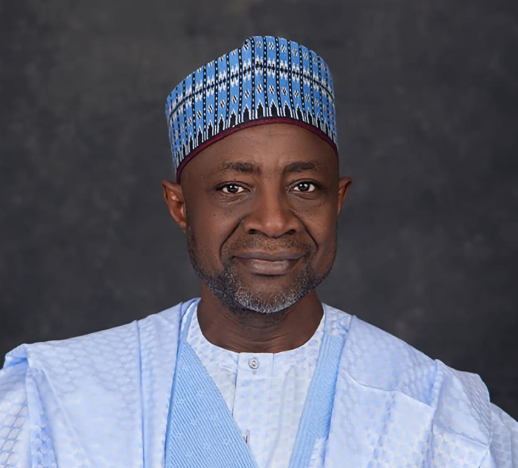
At the forefront of this movement is Professor Mohammed Sani Haruna, the former Executive Vice Chairman of the National Agency for Science and Engineering Infrastructure (NASENI).
During the 2026 Western Zone Symposium held in Keffi by the Nasarawa State Concerned Democrats, Professor Haruna offered a rare glimpse into the professional philosophy driving his ambition.
His argument is straightforward: for Nasarawa to sustain its current industrial trajectory, its next leader must possess a technical understanding of the developmental pathway already in motion.
Perhaps the most striking aspect of Haruna’s presentation was his emphasis on his vocational background.
In an era where political resumes are often dominated by administrative titles, Haruna highlighted a career that began on the shop floor.
Tracing his journey from an engine mechanic and technician to a craftsman, engineer, and eventually a technical manager, Haruna argued that this diverse experience which included stints in carpentry and painting, provides him with a unique perspective on labour and productivity.
This background, he suggests, is essential for a state looking to bridge the gap between education and industrial employment.
This “blue-collar” foundation serves as the bedrock for his strategic alignment with the “Sule Era.” A core pillar of Haruna’s platform is the preservation of the incumbent administration’s economic roadmap.
He explicitly cautioned against a “break in transmission,” warning that electing a successor unfamiliar with the state’s current developmental blueprint could result in a costly policy reversal.
His tenure at NASENI serves as a practical case study for this vision; by facilitating the establishment of the Agricultural Machinery Development Institute (AMEDI) in Lafia and the Solar Cell Production Factory in Gora, Haruna has already demonstrated an ability to align federal industrial policy with Nasarawa’s local resources.
Ultimately, Haruna’s pitch to the Western Zone was notably devoid of typical political rhetoric, focusing instead on a data-led approach and a sectoral needs assessment.
He identified the power sector as the critical bottleneck to the state’s growth, asserting that industrialization is impossible without a stable energy foundation.
By positioning himself as a candidate of experience and exposure, Professor Haruna is betting that the electorates will favour a tested administrator over a career politician.
As the 2027 race takes shape, his candidacy will serve as a litmus test for whether Nasarawa is ready to fully embrace a technocratic future.
Chief Ibrahim Nasiru
A Public Affairs Analyst writes from Abuja
Call to donate, sponsor posts or for advert placements on our website.
Tel: +234 815 089 8880.
Thank you!