


 News Editor

By Ibrahim Nasiru
“True leadership is not a throne of authority, but a hearth of service where the needs of the many outweigh the ambition of the few.”
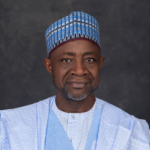
Just as the curtain was finally drawn at the ADC national convention on April 14, 2026, the political spotlight in Nasarawa State has shifted toward Hon. Jibril Sabo Keana (JSK), a frontline governorship aspirant whose candidacy represents a deliberate departure from traditional politics.
Known formally as the Wakilin Keana, JSK has unveiled his “JSK-2027 Project”, a comprehensive blueprint for a “New Nasarawa State” that he describes not just as a campaign platform, but as a moral “covenant of action and purpose” with the people.
His entry into the race is anchored in a legacy of service at the local government level, drawing on his administrative history in Keana LGC to argue that he possesses the comparative advantage needed to reset the state’s agenda through what he calls the Nasarawa State Rebirth Program.
JSK’s blueprint identifies a significant “leadership gap” as the root cause of the state’s underutilized resources and inadequate infrastructure, describing the current delivery of the dividends of democracy as a “low-grade mixed fortune.”
To remedy this, his “JSK-2027 Project” offers an eight-point roadmap designed to deliver measurable transformation through actionable policies and people centered projects.
Central to this vision is a “back to basics” approach to education and healthcare, alongside an ambitious agricultural stability plan featuring a Produce Marketing Board to protect farmers from seasonal losses.
JSK’s strategy focuses heavily on human capital, aiming to create a more equitable society where meritocracy and inclusive governance serve as the core principles of development.
With the concluded ADC convention serving as a backdrop, JSK’s candidacy signals a strategic realignment within the state’s opposition.
Having recently moved from his role within the party’s transitional leadership to focus on his bid, JSK is positioning the ADC as the credible alternative to the established order.
He describes himself as a “saleable material” capable of transcending partisan and geographical boundaries to defeat opponents through a superior development agenda.
Ultimately, JSK’s “Nasarawa Rebirth” is an invitation for citizens to take personal responsibility for their collective future.
By pledging to lead with humility and “listen to every voice,” the Wakilin Keana is betting that the electorate is ready for a servant-leader who prioritizes sustainable planning over recycled political promises.
Chief Ibrahim Nasiru
A Public Affairs Analyst writes from Abuja
Call to donate, sponsor posts or for advert placements on our website.
Tel: +234 815 089 8880.
Thank you!