



 News Editor
By Dahiru Yusuf Yabo
Nigeria stands today at a dangerous intersection—where the authority of the courts is no longer tested by ignorance, but by deliberate political defiance. The unfolding crisis within the Peoples Democratic Party (PDP), culminating in the installation of an interim leadership in the face of clear judicial pronouncements, is not merely an internal party dispute. It is a direct stress test of Nigeria’s constitutional order.
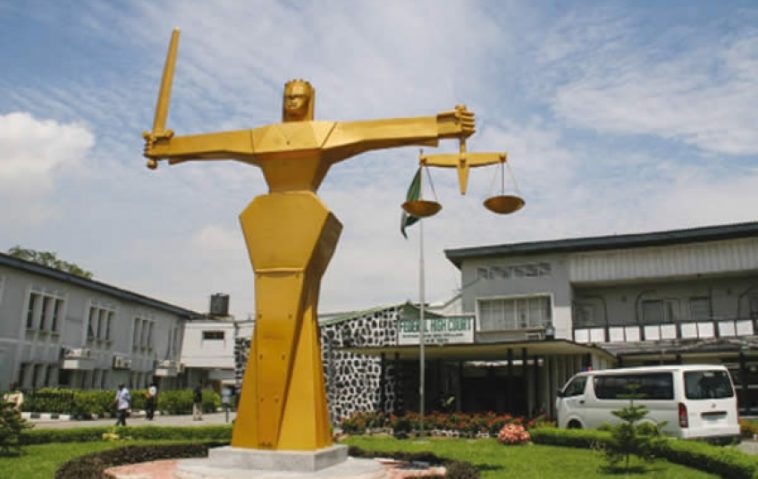
The Supreme Court, as the final arbiter, has spoken—clearly and unequivocally. Its judgment invalidating the PDP convention reaffirmed a basic but sacred principle: that no individual or institution is above the law, and that court orders must be obeyed—whether convenient or not. What followed, however, exposes a deeper and more troubling national reality. Instead of compliance, we are witnessing political maneuvering cleverly disguised as procedural necessity.
This is precisely where the danger lies. Under Nigeria’s presidential system, power is delicately balanced across three arms—executive, legislature, and judiciary—functioning at federal, state, and local levels. The judiciary does not wield force; it depends on moral authority and institutional respect. The moment political actors begin to treat judicial pronouncements as optional, that fragile balance begins to collapse.
What message does this send across the federation? If a Supreme Court judgment can be sidestepped at the highest level of party politics, what prevents a governor from disregarding court orders within his state? What restrains local authorities from acting with impunity? The consequences are not speculative—they are inevitable.
Even more alarming is the growing perception that the judiciary itself is no longer insulated from political influence. Conflicting interpretations, inconsistent enforcement, and what many perceive as selective urgency have steadily eroded public confidence. When courts begin to look like arenas for tactical victories rather than sanctuaries of justice, the rule of law becomes negotiable.
And once the rule of law becomes negotiable, anarchy is no longer a distant threat—it becomes an approaching reality.
Let us be clear: endless litigation is not democracy; it is a symptom of institutional failure. When every political disagreement is dragged to court—and every judgment triggers another round of disputes—we are no longer resolving conflicts; we are recycling them. In the process, both the judiciary and the political system lose credibility.
The so-called “Nigerian factor” must no longer serve as a shield for irresponsibility. Disobedience of court orders is not strategy—it is sabotage. It weakens institutions, emboldens impunity, and ultimately threatens national cohesion. There must be restraint—and it must begin now.
Political leaders must recognize that power exercised outside the framework of law is both temporary and self-destructive. The judiciary, on its part, must reclaim and reinforce public trust through consistency, clarity, and firmness. Justice must not only be delivered—it must be seen to be delivered without fear, favor, or hesitation.
Nigeria cannot afford a system where laws exist merely on paper, while reality is dictated by factional power and political convenience. That path leads not to democracy, but to disorder. We are fast approaching a critical threshold. If court decisions continue to be treated as negotiable suggestions rather than binding authority, the consequences will extend far beyond one political party. They will reverberate across the entire federation.
The warning signs are no longer subtle—they are glaring. The real question now is whether we will act decisively to restore order and respect for the rule of law—or continue this reckless drift until the very foundations of our democracy begin to crumble.
Dahiru Yusuf Yabo, Political & Security Analyst CPC Gubernatorial Candidate Sokoto State. 4th May 2026
Call to donate, sponsor posts or for advert placements on our website.
Tel: +234 815 089 8880.
Thank you!