


 News Editor
By Chief Ibrahim Nasir
(A Public Affairs Analyst)
The political landscape of Nigeria is witnessing a historic realignment.
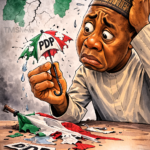
As the umbrella of the People’s Democratic Party (PDP) continues to leak and the Labour Party (LP) struggles with internal identity, a new “Third Force” is solidifying under the banner of the African Democratic Congress (ADC).
No longer just a fringe party, the ADC has transformed into a strategic sanctuary for opposition heavyweights determined to prevent a one-party state in 2027.
The ADC’s transformation began in earnest when leaders like former Vice President Atiku Abubakar, 2023 Labour Party candidate Peter Obi, and former Kaduna Governor Nasir El-Rufai formally adopted the platform as their coalition vehicle.
The leadership structure reflects this “Mega Party” ambition, with former Senate President Senator David Mark serving as Interim National Chairman and Ogbeni Rauf Aregbesola as National Secretary.
By moving into an existing, registered structure, the coalition has bypassed the legal hurdles of registering a brand-new party, allowing them to focus immediately on the singular goal of unseating the incumbent.
Can the ADC provide a more potent opposition than the fractured PDP?
Early signs suggest a disciplined approach. The party has already unveiled its 2026 Congress Timetable, with the National Convention scheduled for April 11–14, 2026.
This institutional readiness, combined with a vocal stance against the Electoral Act 2026, shows a party eager to reclaim the role of a national watchdog.
By launching the “1ADC” movement, the coalition is attempting to merge the diverse support bases of the “G-9 Senators” and grassroots activists into a single, unified people’s movement.
The ADC’s chances hinge on the “54% Arithmetic”—the idea that merging the opposition votes from 2023 could outweigh the incumbent’s tally.
However, the path is fraught with obstacles, ranging from a high-stakes ticket tussle over leadership roles to a divisive zoning debate that risks alienating the North.
Perhaps most daunting are the looming legal mines at the Federal High Court, Abuja, where the party faces a de-registration suit filed by rival interests.
With a crucial ruling expected this March 24, the ADC finds itself in a race against time; a negative verdict could dissolve the very platform these heavyweights have adopted, effectively turning their 2027 ‘Mega’ vehicle into a stranded wreck before the journey even begins.
If these internal and external tremors aren’t stabilized, the coalition’s grand vision may crumble before the first ballot is even cast.
Beyond the legal hurdles, the ADC faces a psychological one: the “ego-clash.” While Atiku Abubakar has reportedly hinted at a single-term “transition presidency” to woo southern allies, Peter Obi’s supporters—the “Obidients”—remain wary of any arrangement that sees their leader playing second fiddle.
For the ADC to be more than a “marriage of convenience,” it must prove that it is built on a shared policy alternative for Nigeria’s 33.4% inflation and security crisis, rather than just a shared hunger for power.
The ADC represents a bold gamble by Nigeria’s political elite to create a credible alternative. If the party can navigate the March 24 court ruling and its April 14 Convention without imploding over personal ambitions, it could provide the most formidable challenge to the All Progressives Congress (APC) in a decade.
However, the clock is ticking. If the “Golden Bride” cannot resolve her internal contradictions by the time the courts and the conventions meet this month, she may find herself waiting at the altar while the incumbent cruises to a second term.
Call to donate, sponsor posts or for advert placements on our website.
Tel: +234 815 089 8880.
Thank you!