



 News Editor
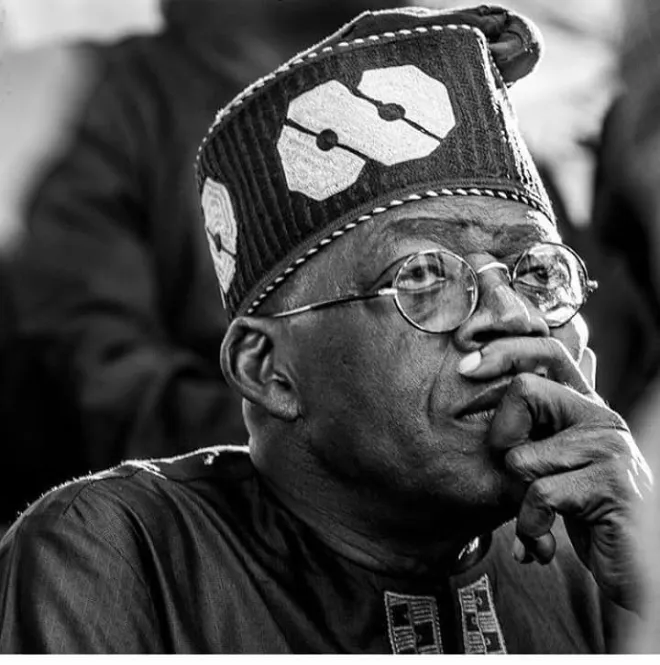
Through: Major General Adeyinka Famadewa, The Special Adviser to the President on Homeland Security
Bandits’ Camps, Convoys & Cattle Rustling: Who Gave The Criminal Industry “Diplomatic Immunity”?
Your Excellency, Mr. President, Sir,
I write this open letter out of deep concern over a disturbing contradiction in Nigeria’s war against banditry. After years of attacks, military operations, casualties and enormous public expenditure, we still appear to be fighting the symptoms of banditry more vigorously than the criminal system producing them. A village is attacked, cattle are rustled, citizens are kidnapped or killed, security forces respond, the attackers retreat—and the operation often appears to end at the scene. The criminals disappear into the forests, regroup, reorganise and return another day. This is not merely a security problem. It is a criminal industry.
At the heart of that industry is an aspect that has received insufficient national attention: cattle rustling. Long before banditry assumed its present scale and sophistication, organised cattle rustling was already devastating pastoral and mixed-farming communities across Northern Nigeria.
Thousands of cattle were reportedly stolen from families whose entire livelihoods depended upon them. Many lost parents, guardians, breadwinners and economic security. Families were impoverished almost overnight, while vulnerable young people were left without meaningful livelihoods. That tragedy created a dangerous recruitment pool for criminal organisations. When you destroy a young man’s livelihood and leave him with nothing, somebody offering money, weapons and a criminal alternative may eventually find him vulnerable.
This does not excuse banditry, but it helps explain part of its ecosystem. Cattle rustling was not simply livestock theft; it evolved into a revenue-generating criminal enterprise. Its proceeds could finance weapons, motorcycles, logistics, recruitment and other criminal activities. It therefore deserves to be investigated as organised crime and potentially as a financial-crime pipeline, rather than being treated merely as another rural offence.
Mr. President, this raises a fundamental question: how did cattle rustling become such a large and enduring criminal industry without the state systematically dismantling its economic infrastructure?
Consider the logistics. Cattle cannot disappear into thin air. If hundreds or thousands of animals are stolen from a community, they must be herded, transported, watered, fed and eventually sold. They must pass through routes, holding points and markets. Somebody receives them. Somebody buys them. Somebody pays for them. Somebody moves the money.
Somebody knows where they came from. Yet Nigerians have repeatedly watched reports of enormous numbers of stolen cattle being moved over long distances and sometimes across state boundaries without effective interdiction.
How is that possible?
The answer requires following the entire chain: the cattle, the markets, the transporters, the intermediaries, the financiers and the proceeds. If criminal proceeds are being converted into legitimate assets, financial intelligence must expose the laundering chain. If stolen cattle are entering commercial markets, those markets must become part of the investigation. Follow the cattle; follow the money; follow the network.
This brings me to the equally disturbing phenomenon of large bandit convoys. Communities have repeatedly reported armed groups moving in substantial numbers, sometimes on hundreds of motorcycles, across long distances before reaching their targets. Such movements are not invisible. Hundreds of motorcycles carrying armed men generate physical movement, communications, logistics and human footprints. They pass through villages, farms and roads; they require fuel, food, intelligence and local contacts.
Yet the state sometimes appears to discover them only when they reach their intended victims.
That is not simply a tactical failure. It is an intelligence failure.
The reported experiences around Kebbe, Angushi, Sifawa and other vulnerable communities demand serious scrutiny. Residents and passers-by have reportedly described armed movements and prolonged presence of gunmen, including allegations that criminals have used vulnerable public facilities such as primary schools as temporary positions before or after attacks. These accounts require proper independent verification, but if confirmed, they represent an extraordinary failure of territorial intelligence.
A primary school should be a sanctuary for children—not a sanctuary for criminals.
How can armed men allegedly remain around a community for many hours, reportedly even beyond 24 hours, without detection or intervention? How did they arrive? Who saw them? Who knew? Who failed to report? And why did the security architecture not detect them?
The Sifawa experience raises an even larger question. If a large convoy of suspected bandits can reportedly traverse hundreds of kilometres before reaching its target, crossing communities and rural routes along the way, where was the intelligence during that journey?
And after military and air support repel such an attack, why should the operation end when the criminals begin to retreat?
The retreat is not the end of the operation.
The retreat is intelligence.
The direction in which the attackers flee is intelligence. Abandoned motorcycles are intelligence. Captured weapons are intelligence. Wounded or arrested suspects are intelligence. Communication devices are intelligence. Local witnesses are intelligence. Every piece of evidence should help locate the source from which the criminals came.
This is where Nigeria’s security doctrine needs a fundamental shift—from incident response to criminal-system destruction.
Bandits have no diplomatic passports. Their camps are not embassies. Their commanders are not diplomats. Their convoys have no right of safe passage. Their stolen cattle are not protected cargo. Their forests are not sovereign territory.
Yet when armed criminals can allegedly move across enormous distances, establish temporary camps, attack communities and return to their bases without sustained pursuit, Nigerians are entitled to ask:
What invisible “diplomatic immunity” is protecting them?
I do not mean formal immunity. I mean an apparent operational immunity created by gaps in intelligence, surveillance, coordination and pursuit.
There is no sovereign republic called “Bandit Forest.” Every forest remains Nigerian territory. Every community remains entitled to state protection. Therefore, when criminals attack and retreat, the security mission should not automatically terminate at the point where they leave the community.
The pursuit should begin there.
The objective should be to locate the camps, disrupt logistics, recover stolen property, identify commanders, follow financial trails and dismantle the network. This must, of course, be intelligence-led, lawful and carefully targeted to protect innocent civilians. But civilian protection must never become an unintended guarantee of criminal sanctuary.
Mr. President, the criminals are learning our patterns. Every time they attack and escape, they learn. Every time they discover how far security forces will pursue them, they learn. Every time they return to their camps untracked, they learn. Every time they can allegedly remain around a community undetected, they learn.
They are studying the state while the state appears to be studying the incident.
That is the strategic imbalance Nigeria must reverse.
The war against banditry cannot be won by killing or arresting individual gunmen while leaving the economic and logistical machinery that produces them intact. If cattle rustling finances criminality, disrupt the cattle market and financial chain. If ransom finances weapons, follow the money. If camps sustain attacks, locate and dismantle them. If motorcycles provide mobility, investigate their supply chains. If poverty and displacement are feeding recruitment, address the vulnerability while simultaneously prosecuting those who exploit it.
And let us be absolutely clear: the Fulani pastoralist is not synonymous with the bandit. Many Fulani communities have themselves been among the victims of cattle rustling, kidnapping, killings and displacement. The enemy is not an ethnicity. The enemy is the organised criminal network exploiting Nigerian territory and Nigerian citizens.
Mr. President, Nigeria must stop measuring victory merely by how many attackers are neutralised during an encounter. The real question is whether the criminal ecosystem survives afterwards.
Where is the camp? Where are the stolen cattle? Where is the money? Who finances the operation? Who buys the stolen livestock? Who provides intelligence? Who facilitates movement across borders? Who converts criminal proceeds into legitimate assets? Who recruits the fighters?
And above all:
Why have these networks survived for so many years?
Kebbe, Angushi, Sifawa and countless unnamed rural communities cannot continue becoming chapters in an endless catalogue of attacks followed by temporary military responses. Nigerians need prevention, not merely reaction; pursuit, not merely repulsion; intelligence, not merely firepower.
Mr. President, the ultimate measure of your administration’s security policy should not be how effectively the government responds after citizens are attacked.
It should be whether the citizens can sleep safely before the attack ever happens.
Because when stolen cattle can allegedly travel hundreds of kilometres more easily than the intelligence required to intercept them, and armed convoys can allegedly traverse vast territories before reaching their targets, the problem is no longer simply that the criminals are powerful.
It is that the state has become dangerously predictable.
And in the war against organised criminals, Mr. President, predictability is itself a vulnerability.
Respectfully submitted.
Hon Dahiru Yusuf Yabo, PGD-CMPC, MCM & MPPA | Sokoto South Senatorial Candidate, PDP 2027 | Former Customs Investigation Officer | Public & Security Analyst | Criminologist
Call to donate, sponsor posts or for advert placements on our website.
Tel: +234 815 089 8880.
Thank you!