



 News Editor
By David Odama
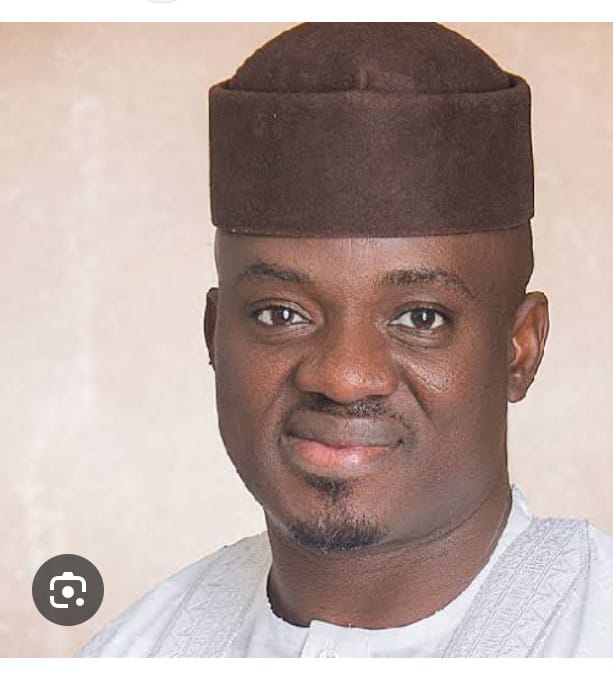
The emergence of Rt. Hon. Dr. David Emmanuel Ombugadu as the Peoples Democratic Party (PDP) governorship candidate for the 2027 election in Nasarawa State has returned one of the state’s most recognisable political figures to the centre of the political conversation.
For Ombugadu, the 2027 contest is not simply another electoral battle. It is an opportunity for the electorate to examine his political record, experience and development ideas against those of other contenders at a time when voters are increasingly demanding substance beyond political rhetoric.
Ombugadu was the PDP’s governorship candidate in both the 2019 and 2023 elections and has now secured the party’s ticket for 2027. His political journey has therefore provided him with a public record that can be scrutinised, debated and compared with the records of other candidates.
His strongest political argument, as his supporters would contend, is not necessarily what he promises to do tomorrow but what he says he has attempted to accomplish in the past.
During his years in the National Assembly, Ombugadu built a profile around constituency representation, community development and advocacy for projects and programmes targeted at his constituents. His supporters have subsequently presented these experiences as evidence of a broader development philosophy centred on infrastructure, human capital, rural development and economic opportunity.
The 2027 governorship contest provides an opportunity to subject those claims to rigorous public examination.
What did each candidate accomplish when entrusted with public responsibility? Which projects did they initiate or facilitate? What institutions did they strengthen? What measurable opportunities did their interventions create? And what lessons from their previous responsibilities would they bring to the governance of Nasarawa State?
These questions are more important than political slogans.
Nasarawa is a state with considerable agricultural potential, a strategic location adjoining the Federal Capital Territory, significant mineral resources, a growing population and an expanding urban economy. Yet the state continues to face challenges relating to infrastructure, employment, healthcare, education, agricultural productivity, security and investment.
The central question before the electorate, therefore, should be how the competing candidates intend to convert these challenges and opportunities into sustainable economic growth.
For Ombugadu, the argument is that his political experience has exposed him to the complexities of public administration, legislative representation and grassroots mobilisation. His aspiration to govern Nasarawa has also been associated with ideas around tourism, urban renewal, investment promotion, hospitality, infrastructure and private-sector participation.
The test, however, will be whether those ideas can be translated into concrete policies capable of expanding the state’s productive base and improving the living conditions of its people.
The 2027 election should consequently provide a platform for Ombugadu and the other candidates to defend their records, explain their programmes and answer difficult questions about the future of Nasarawa.
The contest is already assuming another significant dimension within the Eggon political community.
On September 23, the Eggon Political Forum announced its adoption of Ombugadu as its preferred candidate among six governorship aspirants of Eggon extraction. The forum said its assessment involved stakeholders across the three senatorial zones, members of the Eggon community in the diaspora, youth, women, elders and representatives of other ethnic nationalities. It said the candidates were assessed on such considerations as grassroots presence, party structures, previous records in public office, political experience and manifestoes.
The six candidates identified by the forum were Shuaibu Umaru Kubi of the Accord Party, Nuhu Angbazo of the African Democratic Congress (ADC), Chris Mamman of the Action Democratic Party (ADP), Ibrahim Kassimu Aboh of the All Progressives Grand Alliance (APGA), Ombugadu of the PDP and John Tanko Kigbu of the Young Progressive Party (YPP).
The forum subsequently appealed to the other five candidates to support Ombugadu and urged other ethnic nationalities in the state to support his candidature.
That decision, however, should be understood within its proper context.
The endorsement is politically significant, but it does not automatically mean that every Eggon politician or voter has accepted the position. Indeed, Friday Haruna, President of Eggon Youth Nationwide and the Eggon Cultural Development Association, who witnessed the meeting, acknowledged the forum’s decision while noting that broader Eggon consultations had not yet been concluded.
That distinction matters.
The history of politics demonstrates that numerical strength does not automatically translate into political power. Numbers become politically consequential when they are organised around a coherent strategy, credible leadership and effective negotiation.
The Eggon community has produced politicians, public servants, academics, professionals, military and security officers and business leaders. Its political presence cuts across virtually all major political parties. The emergence of six governorship aspirants from the same ethnic group demonstrates both the depth of political ambition within the community and the challenge of reconciling individual aspirations with collective political objectives.
There is nothing inherently wrong with political competition. Democracy thrives on it. Every aspirant has the right to seek the support of the electorate and every voter has the right to make an independent choice.
The more consequential question is what happens when competing ambitions collide with a broader community’s desire for political consolidation.
If the objective of sections of the Eggon political class is to produce a governor from the community, then the 2027 political season will require something beyond emotional declarations, social-media campaigns and mutual denunciations. It will require negotiation, strategic thinking, coalition-building and a willingness to engage the wider Nasarawa electorate.
The adoption of Ombugadu by the Eggon Political Forum should therefore be seen not merely as another campaign announcement but as a development that will test the political maturity of the community.
Those who agree with the decision have the responsibility to explain why they believe it represents the best path toward their political objective. Those who disagree equally have the right to present alternative candidates, evidence, programmes and strategies.
The intervention of the Aren Eggon, His Royal Highness Justice Ahmed Ubangari Alaku, who reportedly cautioned aspirants and their supporters against bitterness, propaganda, blackmail and hatred while urging them to preserve the bonds of the community, is particularly relevant in this context.
Political disagreement does not have to become communal division.
The danger is not that Eggon politicians hold different political opinions. The danger is that political disagreement could become so bitter that the community loses sight of its broader interests while other political actors consolidate alliances around the state.
The real challenge before the Eggon political establishment is therefore larger than the question of whether Ombugadu should be supported.
It is whether the community can demonstrate the political discipline to translate its demographic presence into meaningful political influence.
Being many is not necessarily the same as being powerful in politics. Political influence is often built through organisation, negotiation, alliances, credible candidates and the ability to persuade voters beyond one’s immediate ethnic or geographical constituency.
This reality will become increasingly important as the 2027 election approaches.
Nasarawa’s governorship cannot be determined by population figures alone. The contest will also be shaped by party structures, grassroots organisation, alliances across ethnic and religious communities, candidate acceptability, campaign resources, policy credibility and the ability of each candidate to present a convincing programme for the state.
For Ombugadu, therefore, the return to the political stage comes with both an opportunity and a responsibility.
He has a political history that can be examined. He has experience that can be interrogated. He has programmes and ideas that can be tested. And he has twice previously contested for the governorship of Nasarawa State.
The electorate should demand that he explain what he learned from those experiences, what he would do differently and how his proposed policies would address the state’s most pressing challenges.
The same standard should apply to every other candidate.
The 2027 governorship election should not become merely a contest of political noise, ethnic arithmetic, propaganda or campaign machinery. It should be an opportunity for Nasarawa voters to examine records, ideas, experience, programmes and measurable plans.
The Eggon Political Forum has made its choice. Whether that choice ultimately produces broader political consolidation remains a matter for the community and, ultimately, the electorate.
The bigger question now is whether the endorsement will trigger a serious conversation about political unity, negotiation, coalition-building and a common strategy—or whether the multiplicity of interests will once again prevail.
For Ombugadu, the message is clear: the road back to the governorship contest has opened, but the record he carries with him will have to withstand public scrutiny.
And for Nasarawa as a whole, 2027 offers an opportunity to judge every candidate not merely by what he says, but by what he has done, what he proposes to do and how convincingly he can demonstrate that his political vision can translate into measurable progress for the people.
Call to donate, sponsor posts or for advert placements on our website.
Tel: +234 815 089 8880.
Thank you!