



 News Editor
By Ibrahim Nasiru
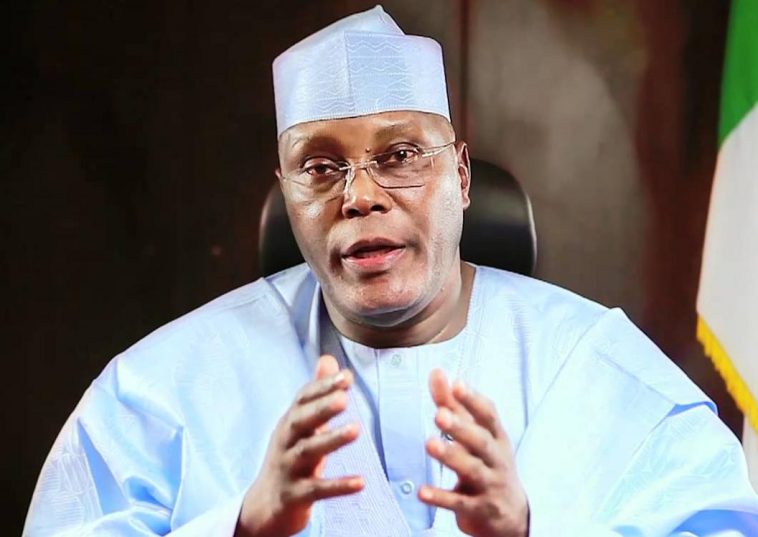
When the Presidency and its media handlers stepped out to dismiss Atiku Abubakar’s pledge to reopen land borders and develop southern Ports, they inadvertently revealed the deep anxiety currently gripping the ruling All Progressives Congress (APC).
In a series of defensive reactions, presidential aides like Sunday Dare claimed that land borders—including the Kamba post in Kebbi—were already opened by executive order, while challenging the opposition to state exactly which controls they would remove without compromising national security against terrorism and arms trafficking.
But this defense exposes a profound institutional disconnect. By confusing archaic physical blockades with actual modern border governance, the administration is attempting to gaslight a population that is suffocating under current operational realities.
To understand why the incumbent administration is panicking, one must look at the sheer substance of Atiku’s proposal. The Presidency believes that an open border means an uncontrolled border. In reality, Nigeria’s current border system is functionally closed to legitimate businessmen but highly porous to criminals.
The current policy relies on a hostile web of multiple physical checkpoints, prohibitive customs bottlenecks, and rampant institutional extortion. This blunt approach does not stop terrorism or smuggling; instead, it actively drives commerce underground into unmonitored, illegal routes, enriching corrupt actors while starving formal economic channels.
By promising a comprehensive overhaul of these trade corridors, Atiku is not advocating for anarchy; he is proposing a transition to technology-driven border management.
Modern border governance relies on digital intelligence, automated tracking, and advanced non-intrusive cargo scanners rather than endless physical gates that serve only as toll points for extortion. Relaxing “existing controls” does not mean abandoning safeguards against transnational organized crime; it means removing the bureaucratic red tape and administrative bottlenecks that make legal trade a financial impossibility.
When legitimate traders can clear their goods transparently through digitized processes, informal smuggling routes lose their economic incentive, making it infinitely easier for state security apparatuses to isolate and neutralize actual criminal and terrorist networks.
Reopening a single border post like Kamba as a reactive political gesture does not substitute for a coherent national trade policy. Across Nigeria’s vast border communities—from Seme and Idiroko in the South-West to Illela in the North-West and Sahuda in the North-East—local economies remain systematically starved. The current administration has consistently treated border management as a blunt instrument of economic isolation rather than an engine for regional wealth creation.
Furthermore, the pledge to develop southern and Eastern Ports—such as Calabar, Port Harcourt, and Uyo—strikes at the very heart of Nigeria’s structural economic imbalance. For decades, merchants from the East, South, and North have been forced to endure the logistical nightmare, extortion, and gridlock of Lagos Ports.
Decentralizing Port operations is a common-sense economic revolution that would immediately lower the cost of doing business, create thousands of regional jobs, and reduce the price of goods in local markets across the country. Dismissing such a vital decentralization strategy as a political gimmick shows how disconnected the current administration is from the day-to-day realities of Nigerian business owners.
The administration wants the public to believe that the painful economic conditions and rigid administrative bottlenecks of today are permanent national security necessities. But by pretending that a broken, corrupt status quo is the only shield against instability, they are asking Nigerians to accept economic hardship as a permanent destiny.
Atiku Abubakar’s economic blueprint shatters that narrative. It reminds the nation that choices still exist, that border security can be achieved without destroying local commerce, and that a prosperous, secure, and truly open Nigeria is entirely possible.
The campaign has barely begun, but the debate has shifted, and the establishment is officially on notice.
Chief Ibrahim Nasiru
Is A Public Affairs Analyst.
Call to donate, sponsor posts or for advert placements on our website.
Tel: +234 815 089 8880.
Thank you!