


 News Editor
By David Odama
Nigeria’s democratic journey has been long, turbulent, and often disappointing. Since the return to civilian rule in 1999, the country has produced countless politicians, seekers of office, and eloquent rhetoricians. Yet, the results have too often fallen below expectations. In a nation burdened by insecurity, economic fragility, elite distrust, and institutional decay, the question before Nigerians is no longer simply who can win elections, but who can govern effectively.
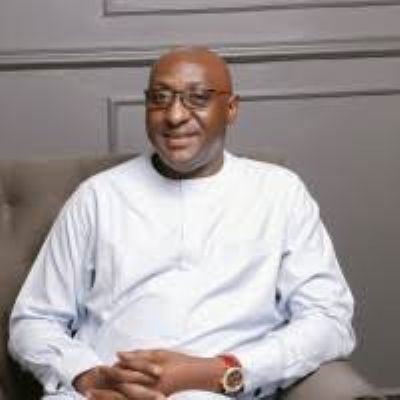
It is within this context that the candidacy of Dr. Mike Agbo Omeri, former Director-General of the National Orientation Agency (NOA), deserves serious reflection. His profile presents something increasingly rare in Nigerian politics: a technocratic statesman with demonstrable executive experience across the public sector, private enterprise, development institutions, national policy platforms, and the global space.
Nigeria today does not merely need political charisma. It needs managerial acumen. The tragedy of the Nigerian state is that politics has often overshadowed governance. Electoral success has too frequently become disconnected from administrative competence. Yet the demands of modern statecraft require deft management, energy, and dynamism to embark on reforms in lawmaking, the economy, human development, security architecture, digital transformation, and internal economic diplomacy.
In a country where corruption has become systemic and normalized, Nigeria needs leaders whose ideology is anchored on transparency, meritocracy, e-governance, decentralization, and institutional accountability. The nation’s greatest crisis may not simply be lack of resources, but failure of systems.
Agree with his prescriptions or not, it is difficult to dismiss the depth of preparation reflected in Omeri’s record. His suitability for the Nasarawa South senatorial seat in 2027 is not built around ethnic populism, religious mobilization, or emotional grandstanding. It is anchored on competence, exposure, discipline, institution-building, and patriotism.
Raised in a family rooted in education and public service, refined through reputable institutions and elite global executive programmes, Omeri embodies a blend of Nigerian grounding and international exposure. His career trajectory includes serving as Director of Press to several governors, Commissioner, Senior Legislative Aide to a ranking Senator, and DG of NOA. These roles demanded strong leadership, strategic planning, and the ability to coordinate complex institutions.
At NOA, Omeri oversaw nationwide campaigns on civic education, national unity, and public awareness. His tenure demonstrated the capacity to manage a sprawling bureaucracy while navigating Nigeria’s complex political terrain. His transformation of the agency remains one of the more compelling turnaround stories in Nigerian public enterprise management.
At a time when Nasarawa struggles under policy inconsistency, fiscal instability, weak governance structures, and declining public trust, Omeri represents a generation of leaders shaped by capabilities in economic management and administration rather than agitation. His recognition that unemployment fuels insecurity is particularly important. Nigeria cannot sustainably defeat insecurity while millions of young people remain economically stranded.
His industrial vision resonates with a neglected reality: Nigeria cannot consume its way into prosperity. It must produce. His repeated references to textile manufacturing, automobile clusters, agro-processing, solid minerals, and export competitiveness suggest a production-oriented development framework rather than dependency economics.
Critics may argue that technocratic brilliance does not automatically translate into political success. Nigeria’s legislature is not merely an economic office; it is a deeply political institution requiring coalition management, electoral machinery, and grassroots mobilization. Managing a bank is not the same as managing a fractured federation of over 200 million people.
Yet, Omeri is no stranger to politics. He competed vigorously for the senatorial ticket of the PDP in the 2023 primaries. His pan-Nigerian outlook, emphasis on unity, and detribalized leadership carry weight in an era where identity politics threatens national cohesion.
Nasarawa South must ask whether its historical preference for conventional politicians has produced the outcomes citizens desire. Persistent crises raise the argument that technical competence and institutional experience should matter more in leadership selection.
Nigeria’s structural debates: federalism, devolution, citizenship, and institutional balance can no longer be postponed indefinitely. Leaders like Omeri, shaped by intellectual traditions and practical governance, may represent the fresh breath needed to revolutionize the nation’s orientation.
His emergence from the Northern Central intellectual tradition is significant. Raised in a family rooted in education and public service, educated in reputable institutions, and refined through elite global executive programmes, Omeri embodies a blend of Nigerian grounding and international exposure. More importantly, his record shows executive responsibility from an unusually young age.
Becoming Director of Press to several governors, Commissioner, Senior Legislative Aide to a ranking Senator, and later DG of NOA was not ceremonial leadership. It required strong leadership skills, strategic planning expertise, hard work, discipline, and the ability to coordinate the operations of a behemoth institution operating in a complex nation. His career trajectory suggests familiarity with the difficult mechanics of managing complex systems spanning a broad spectrum of sectors, something Nasarawa State desperately requires.
Nigeria’s democratic journey has been long and uneven. The challenge now is not just to elect leaders, but to choose those who can govern effectively. In Dr. Mike Omeri, Nasarawa South sees a candidate whose career reflects competence, exposure, and institution-building. Whether this translates into electoral success remains to be seen, but his candidacy underscores a critical truth: Nigeria’s future depends not on charisma alone, but on leaders who can manage, reform, and build.
Call to donate, sponsor posts or for advert placements on our website.
Tel: +234 815 089 8880.
Thank you!