



 News Editor
By David Akoji
In every democracy, there should be institutions whose influence extends beyond electoral politics. The judiciary, labour unions, the media, traditional rulers and religious bodies all play varying roles in shaping public discourse. Among these, the Catholic Bishops’ Conference of Nigeria (CBCN) has, for decades, occupied a distinctive place as one of the country’s consistent moral voices.
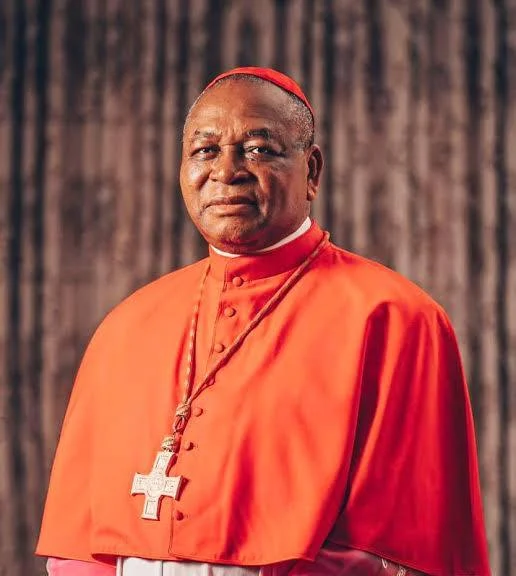
The recent meeting between President Bola Ahmed Tinubu and a delegation of Catholic bishops, followed by public comments attributed to Cardinal John Onaiyekan, has once again ignited debate about the proper boundaries between confidential engagement, public advocacy and political accountability. Beyond the immediate controversy, however, lies a more fundamental question: how should democratic societies manage disagreements between elected governments and influential moral institutions?
The CBCN: A Long Tradition of Public Engagement
The Catholic Bishops’ Conference of Nigeria is the official assembly of Catholic bishops in Nigeria. It brings together bishops from dioceses across the federation to deliberate not only on ecclesiastical matters but also on issues affecting national life. The Conference states that it serves more than 30 million Nigerian Catholics spread across all states and the FCT.
For decades, successive CBCN communiqués have addressed:
* electoral integrity;
* corruption;
* insecurity;
* constitutional reforms;
* poverty;
* education;
* interfaith relations;
* national unity; and
* leadership accountability.
Military governments and civilian administrations alike have all, at different times, been subjects of episcopal criticism. From the annulment of the June 12 election through successive democratic administrations, the Bishops have consistently presented themselves as defenders of justice, human dignity and the common good.
Whether everyone agrees with their prescriptions is another matter entirely.
Do the Bishops Speak for Nigeria?
An important distinction is often overlooked.
The bishops undoubtedly speak authoritatively for the Catholic Church. They do not, however, automatically speak for all Nigerians.
Nigeria’s population is religiously and ethnically diverse. Christians themselves belong to numerous denominations, while Muslims constitute another major religious community alongside adherents of traditional beliefs.
Available Church figures indicate that Catholics number roughly 30–35 million Nigerians. Depending on which national population estimate is used, this represents approximately 13–15% of the country’s population, although Catholics remain one of the country’s large and organised religious constituencies.
Consequently, when the bishops comment on public affairs, they contribute significantly to national discourse, but their position should not automatically be interpreted as the settled opinion of all Nigerians.
Have They Ever Decided Elections?
History suggests otherwise.
The CBCN has often encouraged credible elections, condemned electoral malpractice and urged citizens to vote according to conscience. It has consistently advocated peaceful participation rather than partisan mobilisation.
There is little empirical evidence that episcopal communiqués have independently determined the outcome of presidential elections.
Nigerian voting behaviour remains influenced by a complex interaction of:
* regional identity;
* ethnicity;
* religion;
* party structures;
* incumbency;
* candidate personalities;
* economic conditions; and
* local political networks.
Academic studies generally find these factors more predictive of electoral outcomes than endorsements or criticisms by religious leaders alone.
The Bishops may shape Catholic elite opinion and moral conversations, but electoral outcomes remain primarily political rather than ecclesiastical.
Does the President Have the Right to Disagree with the Bishops?
Absolutely.
Democracy grants no institution a monopoly over truth.
Just as the bishops have every constitutional and moral right to present concerns to government, an elected President equally possesses the democratic legitimacy to disagree, provided such disagreement remains respectful and supported by facts.
Consultation does not compel submission.
Listening is not synonymous with acceptance.
A mature democracy expects robust conversations between government and civil society, including religious leaders.
The real test lies not in whether disagreement occurs, but in whether it is managed with civility.
Were President Tinubu’s Responses Supported by Evidence?
Let’s examine the issues that were discussed.
The President often reference improvements in macroeconomic indicators such as improved foreign reserves, increased government revenues, higher oil production, declining inflation trends, exchange-rate stabilisation and renewed investor confidence, there are indeed data from institutions such as the Central Bank of Nigeria, the National Bureau of Statistics, the IMF and the World Bank that support improvements in several macroeconomic indicators over the past year.
Conversely, the Bishops focused on:
* rising cost of living;
* food inflation;
* unemployment;
* insecurity;
* poverty;
* household hardship; or
* declining purchasing power,
there is equally abundant statistical evidence from domestic and international sources demonstrating that millions of Nigerians continue to experience severe economic difficulties despite improvements in some macroeconomic indicators.
In other words, both perspectives can be simultaneously true, one perspective dose not necessarily negate the other.
An economy may improve statistically while ordinary citizens continue to struggle.
Macroeconomic recovery often precedes improvements in household welfare, economists will agree on this point.
The challenge for political and governance communication is to bridge that perception gap and this is where the critical mandate of the National Orientation Agency must not be ignored. The Agency has suffered lack of funding since January 2026, thus constraining its new found visibility and vigorous sensitization and public enlightenment efforts on government policies, programmes and activities. NOA’s partnerships with the big 6 television stations; Channelstv, AIT, TVC, Arise TV, News Central, Silverbird TV and language Channels on Startimes among others have stalled owing to NOA’s inability to sustain payments.
Should Cardinal Onaiyekan Have Spoken Publicly Immediately After the Meeting?
Reasonable people may differ.
One school of thought argues that private meetings between religious leaders and Presidents should remain confidential unless jointly communicated. Confidential dialogue encourages candour and preserves trust.
Another perspective maintains that Bishops owe transparency to the faithful and therefore have every right to report their impressions.
The critical issue now should not be whether the Cardinal spoke.
It is whether the timing, tone and completeness of the account promoted understanding or unintentionally encouraged competing public narratives.
Where multiple participants later offer differing recollections, public confidence can suffer.
Managing the Current Exchange
Nigeria gains little from prolonged public exchanges between respected religious leaders and the Presidency.
Both institutions enjoy enormous public visibility.
Accordingly:
* Government should avoid appearing defensive toward criticism, instead, there should be consistent rigorous efforts to keep the public abreast of government, policies, programmes and activities and NOA should be energized for this purpose.
* Religious leaders should avoid language that could unnecessarily personalise disagreements.
* Both sides should emphasise shared national objectives.
* Future engagements should include agreed communication protocols.
* Public attention should return to solving substantive national challenges rather than debating conversations.
Ultimately, Nigerians are less interested in who won a media exchange than in whether insecurity declines, jobs increase, inflation moderates and governance improves.
Beyond Winning Arguments
The relationship between Church and State is healthiest when both recognise their distinct mandates.
The Church provides moral guidance.
Government exercises constitutional authority.
Neither institution should seek to dominate the other.
Cardinal Onaiyekan’s intervention and President Tinubu’s response should therefore not be viewed as evidence of institutional conflict but as a reminder that democratic societies thrive when influential voices engage one another honestly, respectfully and responsibly.
History rarely remembers who had the last word.
It remembers whether dialogue ultimately produced wiser leadership, stronger institutions and better outcomes for the people.
Call to donate, sponsor posts or for advert placements on our website.
Tel: +234 815 089 8880.
Thank you!