



 News Editor
By Christian Ezeh
Nigeria, a country of over 200million people, most populous country in black Africa, with enormous resources natural for domestic, industrial and export goods is now bereft of many of its self-sustainability and self-reliance. In several areas, a grim picture of the situation exists.
Unemployment and youth restiveness: youthful population and job seekers constitute about 60percent of Nigeria’s entire population.
The percentage of people captured in this bracket include those skilled, semi-skilled and unskilled labor.
Sustained increases in unemployment rate over the years continue to swell the unemployment force. About 17 years ago in 2009, a disturbing survey by the Manufacturers Association of Nigeria (MAN), revealed that a total of 834 manufacturing firms shut down operations in the country. Harsh economic conditions like poor electricity, terrible state of the roads and infrastructure decay accounted for the sordid development.
The survey recorded a pathetic picture as follows: Northern axis, about 176 collapse. Southeastern breadth, about 178. The South-South area which comprises Akwa Ibom, Cross River, Bayelsa, Edo and Rivers had 46 companies closing down their operations before the end of December the same year.
Job losses and youth restiveness is one of the most topical issues in today’s contemporary Nigeria. How can the Federal Government of Nigeria under president Bola Ahmad Tinubu solve this puzzle with all its attendant features of insecurity, civil unrest and social economic hardship? Agriculture and Tourism presents a way forward.
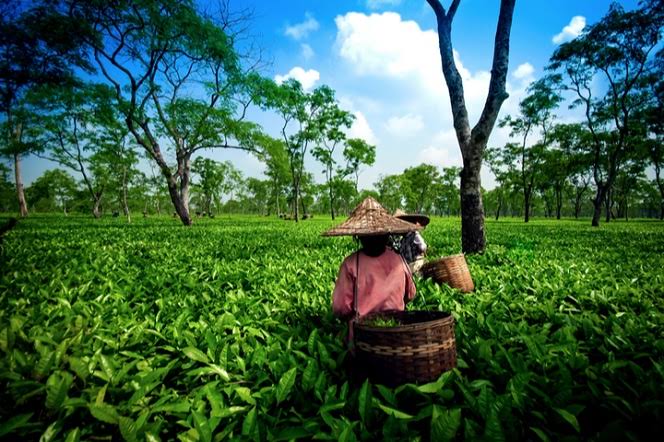
Agritourism has the potential to absorb the teeming youths roaming the streets in violent rampage through micro, small and medium enterprises. A deliberate policy by the Tinubu administration to prioritize Agritourism through aggressive food production, agro allied manufacturing, organization of agro festivals and massive development of infrastructure will stem the rising tide of insecurity ravaging the landscape.
The political prognosis that insecurity has continued to fester as a result of opposition politics – a view held by the Senate president, Godswill Akpabio and many APC pundits, cannot sit conveniently inside the auditorium of Agritourism. Pragmatic leadership knows that an idle hand and a hungry stomach is an ever willing tool ready to be recruited for crime.
Agriculture employed as high as 75percent of the population before the discovery of oil, and the subsequent oil boom of the 1970s.
The groundnut pyramid of the North, cocoa houses of south-west and oil plantations of the south-east stand as historical testaments of the huge potential of agriculture in Nigeria.
If given a sustained deliberate plan by the Federal government under the leadership of president Bola Ahmad Tinubu towards agriculture, not only would there be food sufficiency and security, there would also be job security.
Through agriculture and tourism combined (agritourism), there will be a drastic reduction in the incidences of banditry, kidnapping and terrorism which are, today, a conglomerate for non-state actors.
Agritourism offers enormous opportunities for all spheres of society. All around the 774 local government areas in Nigeria, the 36 states of the federation including the FCT, across national and sub national entities, great potentials abound.
With the diverse languages and cultures of the various nationalities that make up the country, Nigeria is a huge market for tourism.
India today is a leading powerhouse in Agritourism. A conscious, deliberate and sustained effort through its government policy employs more than half of its population in agribusiness and about 25 percent of India’s GDP comes from agriculture. Institutionalized policy toward Agritourism innovation in the country is most laudable. Indeed, India has established itself consistently as a global force in Agritourism.
Nigeria also has a bright prospect in this regard. In fact, it has more than what it takes to compete favorably in all respects, even surpassing every competitor on the global stage.
Comparative advantage of Agritourism: it has the prospect to balance trade. The import export dichotomy, a bane of the mono-economy heavily dependent on Petrodollar will, conversely, strengthen the naira. Local manufacturing will therefore challenge the export deficit and boost exchange earnings and foreign reserves.
The manufacturing sector, which has over 70 percent dependency on imports such as chemicals, machinery and raw materials will then be sourced locally within.
Sustainable Agritourism has superlative supply chains across multiple regions of the world. Local inhabitants gainfully survive in horticulture and animal husbandry while visiting tourists take delight in wildlife, like visiting national parks and, at the same time, having profound relaxation and luxury.
Saint Lucia in the Caribbean uses Agritourism to boost its Gross Domestic Products (GDP) and employment rate. Its national policy on the green economy sustains millions of its population. Costa Rica has a beautiful topography which enhances its agriculture sector. With tourism as a primary revenue driver, it synthesizes beautifully with its agrarian program.
Bhutan in Oceania mixes subsistence farming with high volume and low volume tourism which increases per capita income through its well regulated policy in sustainable Agritourism.
Greece, one of the developed countries in Europe, enjoys significant inflow into its economy by exporting olive oil, wine and dairy products. Its Mediterranean Agritourism leveraging on foreign exchange sustains rural population, provides food security and assists rural community livelihoods.
Government policies should indeed be deliberate to encourage rural dwellers to produce food in sufficient quantities. The National Bureau of Statistics in 2022 reported that agriculture employed about 35 percent of Nigerians.
The Food and Agriculture Organization, FAO, continues to encourage developing countries to permanently augment their food supplies. It warns that no one, two or three-bumper-year is enough to cushion the effect of hunger, but only a sustained and increased augmenting of supplies would quench starvation.
A definitive look at our arable land in the North, and the vast resources in and around the regions, in conjunction with our rich cultural heritage, Nigeria’s GDP can gain significantly if agritourism businesses are enabled by sincere government efforts.
The intersection of agriculture and Tourism offers opportunities beyond measure. Nigeria can reinvent itself with national and international sophistication toward this magnificent global trend.
The federal ministries overseeing mines, agriculture tourism, youths and investments are key stakeholders in the agritourism industry. A country bedeviled by insecurity, political and socio – economic problems can no longer progress on a sleeping slumber. While Malaysia, Singapore, Indonesia and a handful of Asian tigers have made considerable progress in agro allied ventures, bringing about commendable rises in their national income per capita, thus growing their respective GDPs, a nation as huge as Nigeria remains backward.
At the 3rd annual conference on the global institutionalization of agritourism held on the 16th of May 2026 hosted by the presidency under the Secretary to the Government of the Federation, SGF, many stakeholders, both inside and out of government showed significant interest. In delivering keynote addresses, interested partners mentioned categorically that no matter how laudable the event may appear, it should go beyond mere conference and beautiful speeches. Rhetoric, which often characterizes government conferences in Nigeria, was identified as an albatross to our economic and socio-political development.
Only a strong political will and honest commitment will bring about a paradigm shift. The conference, though a success in theory, would achieve more and better in practical implementation.
Policies and programs should be domesticated to suit the country’s situation rather than copying external modules hook, line and sinker. These are the resounding views that reverberated all through the conference by a cross section of participants outside the government employment
Call to donate, sponsor posts or for advert placements on our website.
Tel: +234 815 089 8880.
Thank you!