



 News Editor
By Ibrahim Nasiru
As the political calendar inches closer to the 2027 general elections, the internal forces driving Nigeria’s political landscape are undergoing a massive transformation.
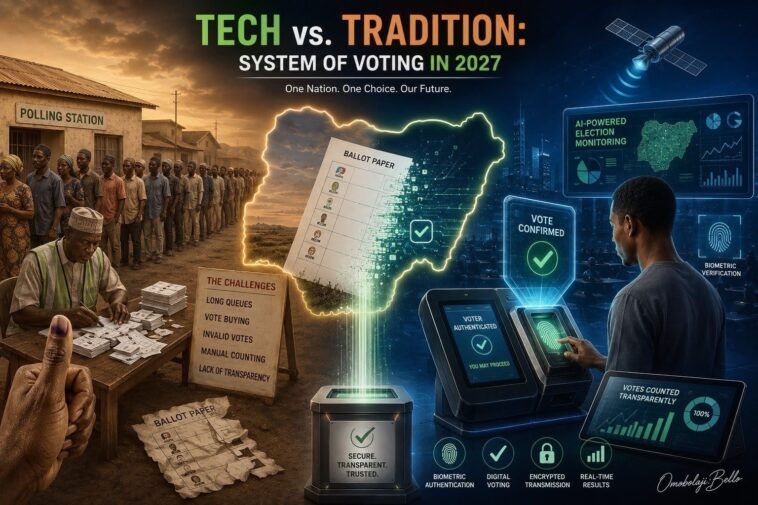
The conversation is rapidly shifting from the old, predictable debates around grassroots zoning and ethnic rotation toward a much deeper ideological conflict over operational methodology.
On one end of the spectrum, the ruling All Progressives Congress (APC) is aggressively consolidating its institutional base. Recent field directives issued by Alhaji Armayau Abubakar, the Director-General of the Renewed Hope People Advocacy (RHPA), reveal a massive, coordinated mobilization effort designed to pull key opposition elements into the ruling party’s fold to secure a solid footprint for a 2027 reelection bid.
This traditional political strategy relies heavily on incumbency power, high-level cross-carpet defections, and structural expansion across regional voting blocs. It is a time-tested Nigerian political method built on the firm belief that a massive, centralized party apparatus remains the ultimate guarantor of electoral victory.
However, the opposition is beginning to counter this establishment model with radical, unconventional governance blueprints that completely bypass the standard political playbook.
A clear example of this friction emerged when African Action Congress (AAC) presidential candidate Omoyele Sowore proposed a highly tech-driven administrative framework for his 2027 vision, which includes deploying artificial intelligence to manage the Finance Ministry and utilizing automated drone networks for National Defence.
While establishment critics and traditional politicians quickly dismissed these ideas as overly idealistic or impractical for Nigeria’s current structural realities, they represent a significant ideological shift in the polity.
They signal a rapidly growing demand among younger, digital-native voters for an automated system of governance that can permanently bypass manual bureaucratic gridlocks and deep-seated systemic corruption. This rising political faction argues that technology, rather than traditional political zoning agreements, holds the real key to reviving national security and establishing financial transparency.
This emerging battle line between mechanical tradition and digital disruption is being further accelerated by heavy legislative moves currently playing out in the National Assembly. The House of Representatives’ passage of the Executive Bill to establish state police marks a historic shift toward dual policing across the federation.
This massive decentralization policy is serving as a major battlefield where regional political actors are looking to construct their own local security architectures ahead of the 2027 showdown.
For traditional politicians, state police forces look like a powerful tool for localized governance, grassroots control, and regional political dominance. For tech-forward reformers, however, this legislative shift presents a golden opportunity to advocate for localized, data-driven security networks managed by modern surveillance algorithms and facial recognition, rather than relying on outdated, manual policing techniques.
When you look at the raw numbers, the 2027 race will not just be a typical contest of loud political personalities or cash-and-carry mobilization. It is shaping up to be a definitive referendum on administrative efficiency.
The political party or coalition that successfully bridges the heavy gap between traditional grassroots structure and modern technological governance is the one that will ultimately capture the mandate of an increasingly impatient, tech-savvy electorate.
Chief Ibrahim Nasiru
A Public Affairs Analyst writes from Abuja
Call to donate, sponsor posts or for advert placements on our website.
Tel: +234 815 089 8880.
Thank you!