


 News Editor
In the count down to all available indices and information, Nigeria does not have a poverty problem. What she has is an inequality problem that manufactures poverty. Nigeria is a nation where crude oil money builds private jets in Abuja while children in Abaji drink from the same stream as cattle. Where billionaires buy their third Rolls-Royce in December while 133 million citizens, over 63% of us live in multidimensional poverty. The tragedy is not that we are poor. The tragedy is that we are poor by deliberately weaponized design.
1. The mathematical equation that doesn’t add up
The numbers offend common sense. Nigeria is Africa’s largest economy, the 6th largest oil producer in OPEC, and home to the continent’s richest man, Aliko Dangote. Yet 1 in 5 out-of-school children worldwide is Nigerian. Over 33% of our workforce is unemployed or at best underemployed. A woman in Gwagwalada will die in childbirth because the PHC has no expertise to handle the case in the midst of no light, while a senator’s medical bill abroad costs more than that clinic’s 10-year budget.
This is not scarcity. This is distribution injustice. We produce enough to feed, educate and heal everyone. But our system is designed to move wealth up vertically and not out horizontally. The top 1% or less, capture more income than the bottom 60% combined. When Dangote says “one Rolls-Royce = one factory for 1,000 people,” he was exposing the equation: every luxury consumed by one is opportunity denied to many.
2. How inequality breeds poverty
Poverty is not just lack of money. It is lack of access, lack of voice, lack of a future. And inequality is the factory that mass-produces all three.
Access: The child of the poor attends a school with no roof; the child of the rich attends one with a swimming pool. Both write the same WAEC, the same NECO, the same JAMB and so on. We call it merit when only one passes, but we never look at the opportunities, circumstances and conditions under which they studied.
Opportunity: The son of a nobody has a first-class degree and no job. The son of a somebody crawled to have a pass degree and three offers are available to choose from. We call it “connection.” The poor call it despair, frustrations and injustice.
Justice: The petty thief that steals a load of bread spends 5 years awaiting trial in Kuje Prison. The politician that steals pension funds spends 5 days in an air-conditioned EFCC cell, then gets a plea bargain. The law, like money, bends toward power.
Inequality tells the poor: “Your life is worth less.” Poverty makes them believe it. That belief is how nations break.
3. The geography of exclusion
Poverty in Nigeria has a postcode. If you are born in Kuje or Gwagwalada or my rural Nasarawa state B. A. D. in Koron Kuje Chiefdom, you start life 30 steps behind someone born in Maitama. Your PHC has no simple primary drugs. Your school has very few or no teachers. Your road is impassable during the rainy season. Yet your traditional ruler is invited to Abuja to bless policies he didn’t shape, for people he is incapacitated to help.
We have created two Nigerias. One with estates, CNG cars, and private hospitals. Another with IDP camps, okadas , prophets and herbalists. The two meet only in traffic — when the convoy of the first forces the keke of the second off the road.
4. The lie of “hard work”
The most insulting myth we tell the poor is: “Just work hard.” Hard work without access is punishment. The woman frying akara by 4am is working hard. The farmer in Doma or Keana under the sun cultivating ridi is working hard. The graduate submitting 200 CVs from Awe, Wamba or Akwanga is working hard. What they lack is not effort. It’s equity — a system that rewards effort with outcome.
You cannot climb a ladder if someone has climbed and took it with him or is standing on it and looking you scornfully as they keep pulling it up. That is what extreme inequality does. It tells the poor to run a race while their legs are tied and hands cuffed behind.
5. Breaking the cycle: From pitiable lamentations to policy
We don’t need more “poverty alleviation programs” press conferences. We need to attack inequality at its roots:
A. Make work pay: A factory job in Keffi or Karu should feed a family. Minimum wage that can’t buy a bag of rice is state-sponsored poverty. If one Rolls-Royce can fund 1,000 jobs, then every policy must ask: “Does this create production or just consumption and luxury?”
B. Fund the commons: PHCs, public schools and rural roads are not charity. Fixing these are not favour.
They are the infrastructure of equality. The child in Kokona deserves the same chance at life as the child in Asokoro. Until the government believes that, budgets will keep feeding the greedy and starving the needy, the circle continues.
C. Tax wealth, not just wages: We tax the salary of the teacher but not the private jet of the oil magnate. We chase the hawker for ₦200 market toll but let multinationals hide billions. A progressive tax system isn’t socialism. It’s civilization.
D. Restore dignity in place: As with traditional rulers and PHC, development must be local, grassroots and the basics. A modern rice mill in Lafia, a yam flour plant in Nasarawa Eggon, a functional tech hub in Karu — spread opportunity so young people don’t have to flee to Lagos or japa to be human. A teacher on salary grade level 8 should be proud to be one.
The final verdict
Poverty is not a natural disaster. It is a policy choice. Inequality is not fate. It is a deliberate designed structure. And structures can be rebuilt to accommodate new realities expunging defects, anomalies and cracks.
A nation where the few live like kings and the many live like slaves, even less than so, is not a nation. It is a plantation with a flag. We will either deal with inequality, or inequality will deal with us, it’s only a matter of time, through crime, through migration, through the slow collapse of the social contract. The children for whom you refused to provide education with dignity are ostensibly being prepared to serve your children so the line of perpetuation is extended and you feel normal.
The question is not “Can Nigeria afford to end poverty?” The question is “Can Nigeria afford not to?”
Because a country that abandons its poor will soon discover that even the rich cannot sleep in peace. And when the time for account rendering comes, we will not be asked how much we gathered. We will be asked how many we lifted.
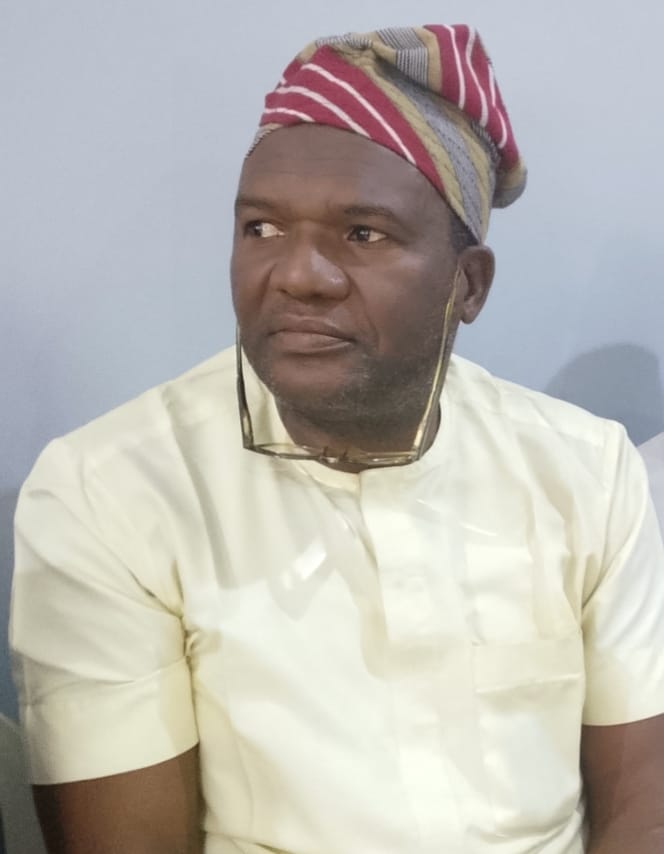
I am Dr Frank Peter Ombugadu still being modest in adding value and substance to the reservoir and storehouse of knowledge and education
Call to donate, sponsor posts or for advert placements on our website.
Tel: +234 815 089 8880.
Thank you!